How Penile Traction Devices Work: A Comprehensive Guide to Penile Length and Curvature Correction
Outline and Introduction: Why This Topic Deserves a Clear Explanation
Penile traction devices sit at the intersection of anatomy, patience, and evidence-based self-care. They are often discussed in whispers, yet they matter to men dealing with curvature, loss of length after surgery, or worry about visible change. Understanding how these devices work can replace guesswork with realistic expectations and safer habits. This guide unpacks the mechanics, the evidence, and the day-to-day choices that shape outcomes.
For many readers, the subject is not about vanity alone. It may involve Peyronie’s disease, a condition linked to scar tissue and bending during erection, or length loss after prostate surgery, or a congenital curve that has always been there but has become more bothersome over time. In those situations, traction therapy enters the conversation as a conservative option that may help preserve length, improve shape, or support recovery under medical guidance. It is not a magic tool, and it is not a shortcut. Think of it more like orthodontics than a gym workout: gradual, measured force applied over time to encourage tissue remodeling rather than sudden change.
The outline of this article follows a practical path:
-
What penile traction devices are and the biological principles behind them
-
How tissue remodeling and controlled stretching may influence length and curvature
-
What clinical studies suggest, including benefits, limits, and unanswered questions
-
How common device designs compare and what safe day-to-day use looks like
-
Who may benefit most, when caution is essential, and how to make an informed decision
This topic is relevant because it sits between medical treatment, body confidence, and practical self-management. Online discussions can be noisy, and product marketing often speaks louder than nuance. A well-informed reader needs something steadier: clear anatomy, realistic numbers, and guidance that respects both privacy and safety. That is what the rest of this article aims to provide. By the end, you should understand not only how traction works on paper, but also why outcomes vary so much in real life and why a urologist’s input can make the process more useful and far safer.
The Core Mechanism: How Penile Traction Changes Tissue Over Time
At the most basic level, a penile traction device applies gentle, sustained tension along the shaft. The idea is simple, but the biology underneath it is more interesting than it first appears. Human tissue is not static. Skin, connective tissue, fascia, blood vessels, and even the fibrous layers that help define penile shape can respond to mechanical stress when that stress is controlled, repeated, and maintained for long enough. This process is often discussed through the lens of mechanotransduction, a term that describes how cells convert physical force into biological signals. In plain language, when tissue is stretched within a tolerable range, cells may respond by reorganizing structural proteins, changing collagen alignment, and supporting gradual remodeling.
The penile shaft contains several important structures, but traction discussions often focus on the tunica albuginea, the tough fibrous layer surrounding the erectile bodies. In curvature disorders such as Peyronie’s disease, scar tissue or plaque can create an imbalance, making one side less elastic than the other. That imbalance can pull the shaft into a bend during erection. Traction does not melt plaque away in a dramatic fashion, and it should not be viewed as a guaranteed fix. What it may do, according to available clinical reasoning and some published studies, is encourage a more favorable distribution of stretch over time, helping tissue adapt and possibly reducing curvature while preserving or modestly improving length.
Force matters, but not in the way many first-time users assume. More pressure does not mean faster success. Excess force can cause pain, skin irritation, numbness, or reduced tolerance, which often leads people to stop using the device altogether. Therapeutic traction relies on low to moderate tension used consistently. The body usually responds better to steady inputs than to aggressive pulling. That is one reason device protocols often involve gradual increases in wear time rather than heroic first-day sessions.
It also helps to understand the time scale. Traction works slowly because tissue remodeling is slow. Cells do not rebuild collagen in a weekend. That is why many treatment plans discuss weeks to months, not days. In this respect, the process resembles other forms of medical remodeling:
-
Orthodontic braces shift teeth gradually through persistent force
-
Stretching regimens in rehabilitation aim to improve flexibility over repeated sessions
-
Scar management often depends on long-term mechanical and topical support
The comparison is not perfect, but the principle is useful: gentle persistence often outperforms intensity. A traction device is therefore less about dramatic daily change and more about nudging tissue in a new direction, bit by bit. That measured pace can feel unglamorous, yet it is exactly why the approach remains part of many non-surgical conversations in men’s health.
What Research Suggests: Length Preservation, Curvature Improvement, and Realistic Outcomes
The evidence on penile traction devices is promising in some scenarios, but it is far from uniform. That is the most honest place to begin. Studies differ in device design, number of participants, hours of daily wear, and the conditions being treated. Some research focuses on men with Peyronie’s disease, while other work looks at men recovering from prostate surgery, men using traction after penile procedures, or men concerned about perceived shortening. Because these groups are not identical, results should not be treated as interchangeable.
In Peyronie’s disease, several studies have reported that traction may help reduce curvature and preserve or slightly improve stretched penile length, especially when used consistently over months. Reported curvature improvements often fall in a modest range, sometimes around 10 to 30 degrees, though results vary widely by starting severity, stage of disease, and adherence. Length changes are also usually modest rather than dramatic. In some studies, average gains or recovered length have been reported in the range of roughly 0.5 to 2 centimeters. Those figures can matter a great deal to patients, but they are not the same as the dramatic claims that appear in some advertisements.
Traction has also attracted attention after prostate surgery because some men experience shortening during recovery. In that setting, the goal is often preservation rather than enlargement. Maintaining tissue stretch and reducing contracture may support better long-term length outcomes, although again the quality of evidence varies. Newer devices sometimes market shorter daily protocols, while older systems often required several hours per day. Early data suggest that shorter, better-tolerated regimens may still offer benefit for some users, but direct comparisons remain limited.
It is equally important to understand what the research does not show clearly. Many studies have:
-
Small sample sizes
-
Short follow-up periods
-
Reliance on self-reported adherence
-
Different measurement methods, which can affect results
These limitations do not make the findings useless, but they do mean readers should be cautious with sweeping conclusions. A moderate improvement in one study does not guarantee the same effect for every individual. Measurement itself can be tricky, since factors such as room temperature, technique, and baseline anatomy affect length data.
Compared with surgery, traction is less invasive, less immediate, and usually less risky, but also less dramatic. Compared with doing nothing, it may offer a meaningful conservative option. Compared with internet myths, it is far more grounded in actual physiology. The takeaway is balanced: traction is not fiction, yet it is not a miracle either. It is a tool with some clinical support, a clear dependence on consistency, and outcomes that tend to be gradual, variable, and best interpreted with professional guidance.
Device Types and Daily Use: Comparing Designs, Comfort, and Safe Routines
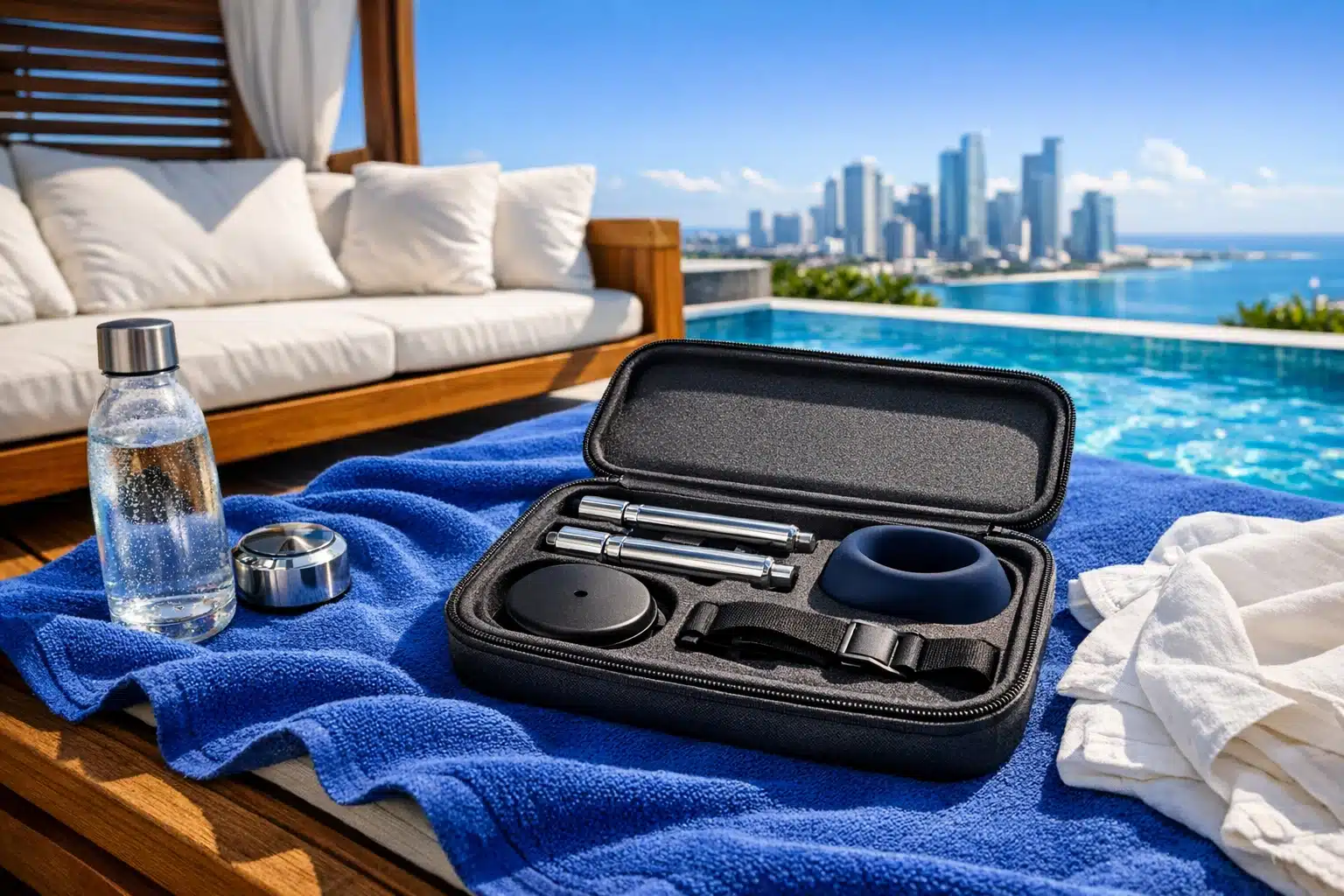
Not all penile traction devices are built the same way, and the differences matter. The classic design uses a base ring at the pubic area, two adjustable rods, and a support at the glans to create forward stretch. Newer models may use vacuum-based glans attachment, belt-style systems, or dynamic springs that aim to maintain more constant tension as the body moves. On paper, most designs chase the same principle: controlled longitudinal force. In practice, comfort, stability, ease of cleaning, and how the glans is held can strongly affect whether a person actually follows the routine.
Rod-based devices are often straightforward and familiar in clinical discussions, but some users find the glans support uncomfortable during longer sessions. Vacuum-adherence models can improve comfort for certain people because they distribute contact differently, though they also require careful fitting and attention to skin health. Belt-based systems may allow more discreet wear under clothing in some cases, but they can feel less intuitive for beginners. A device that looks sophisticated is not automatically better. The better option is often the one that fits correctly, can be worn safely, and is realistic for everyday life.
Building a routine usually works best when it starts conservatively. A typical approach may involve shorter sessions at lower tension, followed by gradual increases as comfort and tolerance improve. That matters because tissue adaptation and user adherence rise or fall together. If the first week feels miserable, the plan rarely survives the month.
A sensible routine often includes the following steps:
-
Read the manufacturer’s instructions fully and compare them with a clinician’s advice if available
-
Check fit before applying meaningful tension; poor positioning creates preventable problems
-
Start with lower force and shorter wear periods rather than aiming for maximum stretch
-
Inspect the skin and glans after each session for color changes, pressure marks, or irritation
-
Clean the device regularly to reduce skin issues and maintain material quality
-
Keep a simple log of wear time, comfort, and any symptoms
Warning signs deserve respect. Persistent pain, numbness, coldness, discoloration, blistering, or swelling are signals to stop and reassess. These are not badges of progress. They suggest poor fit, excessive force, or insufficient recovery. Some men also discover that daily wear is less about physical ability and more about logistics. Work, movement, clothing, privacy, and patience all play a part. The most effective routine is not the most extreme one; it is the one a person can perform consistently without sacrificing safety. In that sense, the humble details of fit and habit may matter as much as the biomechanics themselves.
Who May Benefit, When Caution Matters, and the Practical Conclusion
Penile traction is most useful when it matches a clear clinical need or a well-defined treatment goal. Men with Peyronie’s disease, especially those trying to manage curvature or preserve length, are among the most common candidates. Men recovering from prostate surgery may also discuss traction with their urologist as part of a broader rehabilitation plan. In some cases, traction is considered before or after other treatments to support shape or help limit shortening. The key point is that traction works best as part of a strategy, not as a random purchase driven by anxiety or marketing pressure.
There are also situations where caution is essential. Anyone with active skin breakdown, unexplained pain, severe swelling, impaired sensation, bleeding issues, or a condition that affects safe device use should seek medical advice before starting. Men with significant curvature, sudden worsening deformity, erectile problems linked to pain, or concern about an underlying disorder should not rely on self-diagnosis. A urologist can help determine whether the issue is Peyronie’s disease, congenital curvature, post-surgical change, or something else entirely. That distinction matters because the best plan for one condition may be unhelpful for another.
Traction is only one option in a wider landscape. Depending on the situation, alternatives or complementary approaches may include:
-
Observation and monitoring when symptoms are mild or stable
-
Medical evaluation for pain, plaque, or erectile dysfunction
-
Injection-based treatment in selected Peyronie’s cases
-
Surgery for severe deformity or function-limiting curvature
-
Counseling or sex therapy when distress, avoidance, or body image concerns are central
That last point is easy to overlook. Some men chase a number on a ruler when the deeper issue is fear, comparison, or loss of confidence after a real medical event. A good outcome is not defined only by centimeters or degrees. It also includes comfort, sexual function, emotional relief, and a realistic sense of control.
Conclusion for Readers Considering Traction
If you are curious about penile traction devices, the most useful mindset is informed patience. These tools may support gradual improvement in length preservation or curvature correction, but they ask for consistency, correct fit, and realistic expectations. They are not miracle products, and they should never replace proper evaluation when pain, deformity, or sudden change is involved. For readers navigating this topic quietly and carefully, the smartest next step is simple: pair curiosity with evidence, and whenever possible, let a qualified urologist help turn that evidence into a plan that fits your body and your goals.