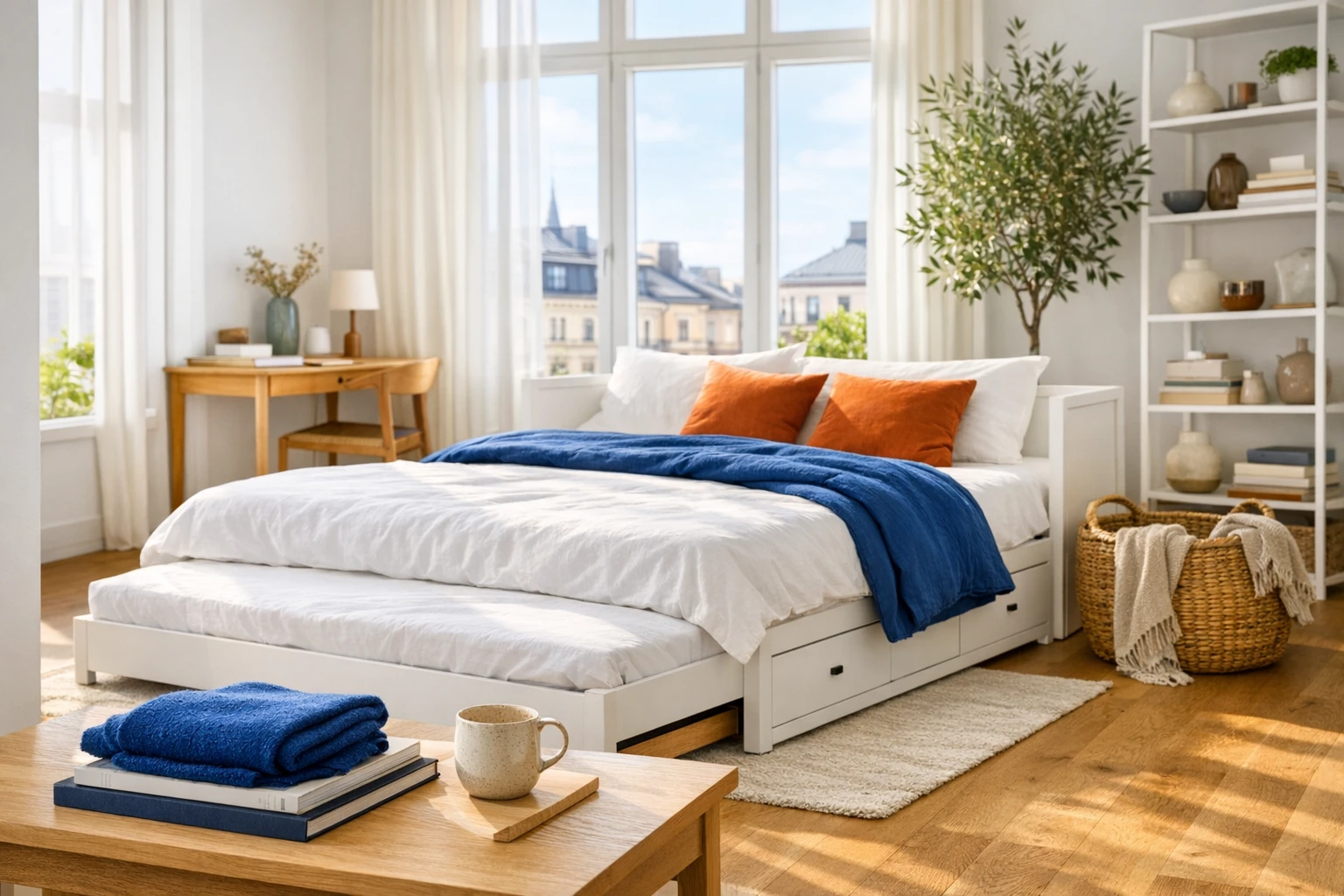
Affordable IKEA Folding Beds: Comfort and Space-Saving Options
Introduction
In many homes, one room has to do the work of three: office by morning, lounge by afternoon, guest room by night. That is exactly why affordable folding beds matter, especially for renters, students, and families trying to stretch every square meter. IKEA has become part of this conversation because its furniture is often designed around compact living, practical storage, and approachable pricing. Choosing well, however, still requires looking beyond the label to comfort, build quality, mattress support, and daily usability.
The idea sounds simple: buy a bed that folds away, spend less, and reclaim space when no one is sleeping. In reality, there are several paths to that goal. Depending on the market, IKEA may offer sofa beds, chair beds, daybeds, trundle solutions, or compact guest options that answer the same need in different ways. That makes the topic useful not only for people searching for a specific product, but also for anyone trying to create a smarter room. A folding bed can be a quiet hero in a small home, but only if it fits your routine, your body, and your budget.
Outline
This article is organized into five practical parts so readers can move from broad planning to confident buying. First, it looks at what “affordable” really means when shopping IKEA folding beds and similar compact sleep solutions, including hidden costs beyond the price tag. Second, it explores comfort in detail, from mattress thickness to frame support and the difference between occasional and frequent use. Third, it examines the space-saving side of the story and shows how a folding bed changes room layout, storage choices, and daily movement. Fourth, it compares folding beds with nearby alternatives such as sofa beds, daybeds, chair beds, and trundles. Fifth, it closes with a buyer-focused conclusion that matches common living situations with the most sensible option.
- Price and overall value
- Comfort and sleep quality
- Space-saving performance
- Comparison with other compact bed types
- Buying advice and final recommendations
1. How Affordable Are IKEA Folding Beds, Really?
Affordability is rarely just about the number on the website. With IKEA, the first thing to understand is that the range changes by country, season, and product line. In some markets, you may find solutions that look like classic folding guest beds. In others, the closest match may be a chair bed, a slim sofa bed, a daybed with an extra pull-out mattress, or a compact frame designed for temporary sleeping. That matters because shoppers often compare very different products under the same label. A simple fold-out chair may be cheaper than a daybed, but it offers a different sleeping experience, a different footprint, and a different lifespan.
When people say they want an affordable option, they usually mean one of three things: low upfront cost, good long-term value, or acceptable comfort at a modest price. These are not always the same. A very cheap guest bed may work once a month, yet feel disappointing for weekly use. A slightly more expensive model with a better mattress or stronger frame may save money over time by lasting longer and needing fewer add-ons.
Several factors shape the final price:
- Type of product, such as chair bed, sofa bed, trundle, or foldable guest solution
- Frame material, with steel, wood, and upholstered builds affecting cost differently
- Mattress thickness and density
- Built-in storage or dual-use design
- Assembly complexity and delivery fees in some regions
It is also wise to calculate the full sleeping setup rather than the frame alone. Buyers often need fitted sheets, a mattress protector, a topper for extra softness, and sometimes a second set of bedding for guests. A budget option can become less budget-friendly once these extras are added. On the other hand, a compact daybed or sofa bed that replaces a separate sofa may deliver stronger value because one piece of furniture performs two jobs. Think of it as paying for function, not just form.
A practical way to judge IKEA pricing is to compare the product against how often it will be used. For occasional guests, even a simpler solution can feel cost-effective. For a teenager’s room, a studio apartment, or a home office that becomes a bedroom every week, spending more for better support is usually the smarter move. The cheapest path is not always the most economical one. In small homes, bad furniture has a way of charging rent in discomfort.
2. Comfort: What Makes a Folding Bed Pleasant or Painful?
Comfort is where many space-saving beds win or lose the argument. A folding bed may look clever in a showroom, but real judgment happens at 2 a.m. when a guest turns over, feels the frame, or wakes with a stiff back. That is why mattress quality deserves more attention than the folding mechanism itself. In general, occasional-use guest beds often come with thinner mattresses, sometimes in the 8 to 12 cm range, while more sleep-friendly options move toward thicker foam layers or better support systems. Thickness alone is not enough, but it is a useful starting clue.
Support comes from the combination of mattress material and the surface beneath it. Slats usually offer a more forgiving feel than a hard panel, while metal support grids may feel firmer and less adaptive. Foam density also matters. Lower-density foam can feel soft in the first few minutes, yet compress quickly under regular use. Higher-density foam may seem firmer at first touch but often holds its shape better over time. People who sleep on their side usually need more pressure relief at the shoulder and hip, while back sleepers often prefer steadier support. A folding bed that is fine for one person may feel completely wrong for another.
Here are the comfort details most worth checking before buying:
- Mattress thickness and whether a topper can be added easily
- The type of support underneath, such as slats, panels, or metal grid
- Bed width, especially if an adult guest will use it
- Ease of getting in and out, which matters for older users
- Noise during movement, including squeaks from hinges or joints
It also helps to match the product to the frequency of use. For a few weekends a year, a compact fold-out bed may be perfectly reasonable. For someone sleeping on it several nights each week, comfort standards should rise sharply. This is where many shoppers regret buying too fast. A topper can improve softness, and good bedding can make a bed feel more inviting, but these cannot fully rescue a weak base or a mattress that bottoms out under body weight.
One useful rule is to ask whether you would sleep on it yourself for three consecutive nights. If the honest answer is no, it may still serve as an emergency option, but not as a truly comfortable one. IKEA products often do well when practicality is the goal, yet comfort still depends on selecting the right category and not expecting miracles from the slimmest, cheapest format. A folding bed should disappear from the room when folded, not announce itself to your spine when unfolded.
3. Space-Saving Benefits Beyond the Obvious
The phrase “gain de place” sounds simple in French and feels even better in real life: more breathing room, fewer obstacles, and a home that adapts without a fight. Still, saving space is not only about whether a bed folds. It is about what happens before and after unfolding it. A compact sleep solution is useful only if the room can shift easily around it. That means measuring open floor area, wall clearance, circulation paths, and storage needs before buying anything.
In a small apartment, every piece of furniture competes for territory. A traditional bed claims a permanent footprint, while a folding option returns part of that area to daily life. That is its main advantage. During the day, the same room can hold a desk, yoga mat, reading chair, or play area. At night, the bed arrives like a stage set changing scenes between acts. The trick is making sure the transformation is quick enough that people actually use it rather than leaving it half-open for days.
Good space planning includes more than the bed itself:
- Measure the bed when folded and when fully extended
- Leave enough room to walk around it safely
- Plan where bedding will be stored during the day
- Check door swing, radiator placement, and nearby outlets
- Consider whether the bed blocks wardrobes or drawers when open
For guest rooms that double as offices, chair beds and narrow sofa beds can be especially practical because they function as seating first. In children’s rooms or flexible family spaces, daybeds with pull-out sleeping surfaces may preserve a cleaner look while still offering extra capacity. In very tight spaces, vertical storage becomes part of the solution: under-bed boxes, wall shelves, and slim cabinets can keep blankets and pillows from becoming visual clutter.
Another overlooked advantage is psychological. Rooms feel larger not only when they contain less furniture, but also when they look intentional. A well-chosen folding bed creates a sense of control. Instead of a room permanently surrendering to a bulky mattress, the furniture works around your life. That can be especially valuable in studios, student housing, and small homes where one corner often has to reinvent itself several times a day.
Of course, space-saving comes with trade-offs. Frequent unfolding can become tiring if the mechanism is awkward, and some compact beds need more floor depth than expected once opened. The smartest purchase is the one that fits the rhythm of the room. If the bed is easy to open, comfortable enough to use, and simple to store, it earns its place. If it turns each bedtime into a puzzle, even a small bed can feel strangely large.
4. Folding Bed, Sofa Bed, Daybed, or Chair Bed: Which Format Makes the Most Sense?
One reason shoppers get overwhelmed is that the market bundles several different ideas under the broad promise of “space-saving sleep.” IKEA is part of that world, and its compact options may fall into overlapping categories rather than one single classic folding-bed format. So the real question is not only which item is cheapest, but which type suits the way the room is used. A chair bed, for example, is excellent when the room needs a seat most of the time and a single bed only once in a while. A sofa bed makes more sense in a living room that regularly hosts overnight guests. A daybed can be visually neat in a study or spare room because it behaves like a couch by day and a bed by night.
Each format solves a slightly different problem. A classic folding guest bed is often the easiest to hide away, but it may offer the least luxurious sleeping surface unless the mattress is upgraded. A sofa bed usually gives the room a more finished look and can replace the need for a separate couch, yet it is often heavier, more expensive, and bulkier. A daybed with a pull-out function can provide two sleeping places in one frame, which is useful for siblings, sleepovers, or occasional guests. Chair beds sit in the middle: compact, clever, and ideal for narrow rooms, though usually best for one adult or a child rather than two people.
A simple comparison helps:
- Classic folding bed: best for occasional guests and easy storage
- Sofa bed: best for living rooms and frequent hosting
- Daybed with pull-out: best for flexible rooms and extra sleeping capacity
- Chair bed: best for very small spaces and solo sleepers
Budget also shifts depending on the category. Chair beds and simpler guest solutions often start lower, while sofa beds and upholstered daybeds climb into higher price brackets. But again, value depends on use. If a sofa bed replaces a sofa and a guest bed, the higher price may be justified. If the bed will live in a closet and appear only during holiday visits, a simpler folding option could be perfectly sensible.
There is also a style question. Some people want the bed to vanish completely. Others prefer a piece that blends into the room all year. IKEA tends to appeal to the second group because many of its products are designed to function as everyday furniture, not just emergency sleep equipment. That can be a real advantage in small homes where nothing can afford to be single-purpose.
The best comparison test is brutally practical: How many nights per month will it be used, how many people need to sleep on it, and what role should it play when no one is in bed? Once those three answers are clear, the right format usually reveals itself quickly. Furniture becomes easier to choose when you stop asking what looks clever and start asking what works on an ordinary Tuesday.
5. Choosing the Right Option for Your Home: Final Thoughts for Budget-Conscious Buyers
If you are shopping for an affordable IKEA folding bed or a nearby alternative, the smartest approach is to begin with your room, not the catalog. Start by deciding who will sleep on the bed, how often it will be used, and where it will live during the day. A student in a studio apartment, a family preparing for holiday visitors, and a homeowner furnishing a compact office-guest room do not need the same thing. What looks like a bargain in one context can feel like a compromise in another.
For occasional guests, a simpler fold-out or chair-bed style solution may be enough, especially if you add quality bedding and, where possible, a thin topper. For regular hosting, a sturdier daybed or sofa bed may justify the extra expense because comfort and durability start to matter more than minimal purchase price. Older guests may appreciate better mattress height and easier entry, while taller adults need close attention to bed length. Children and teenagers often adapt more easily to compact beds, but even then, support should not be ignored if the bed will see steady use.
Before buying, keep this short checklist in mind:
- Measure the room in both day mode and sleep mode
- Budget for bedding, mattress protection, and possible comfort upgrades
- Read dimensions carefully, especially width, length, and folded depth
- Match the design to frequency of use
- Choose a format that fits the room’s main purpose
There is no single perfect answer, and that is actually good news. It means the right choice can be shaped around your habits rather than around trends. IKEA remains appealing because it often meets people where they live now: in smaller apartments, shared homes, flexible rooms, and budgets that need to stretch without feeling joyless. The strongest option is the one that gives you enough comfort to sleep well, enough simplicity to use it often, and enough freedom to reclaim your floor when the morning arrives.
For readers comparing affordable compact beds, the takeaway is clear. Look past the headline price, think carefully about real comfort, and treat saved space as part of the value. A well-chosen folding or multi-use bed can make a home feel calmer, more capable, and surprisingly generous. In a world where rooms must often do more with less, that kind of furniture is not just practical. It is quietly transformative.