All-Inclusive Resorts in Croatia 2026: A Complete Vacation Guide
Croatia has moved from a scenic summer alternative to a serious all-inclusive contender, and 2026 is shaping up to be an especially practical year to book. Refreshed coastal resorts, better regional flight connections, and growing demand for easier holiday planning are bringing more travelers to the Adriatic. Still, Croatia does all-inclusive in its own way, so knowing what is and is not included can make the difference between a good trip and a great one.
1. Guide Outline and Why Croatia Matters for All-Inclusive Travel in 2026
Before diving into regions, prices, and booking tactics, it helps to understand why Croatia deserves a close look in 2026. For many travelers, the idea of an all-inclusive holiday still points automatically to Spain, Greece, or Turkey. Croatia, however, has been steadily building a different kind of appeal: less about giant resort compounds and nonstop staged entertainment, more about combining resort convenience with a destination that still feels connected to real towns, local food traditions, and a highly photogenic coastline. That difference is exactly what makes the country relevant now. Travelers want easier logistics, but they also want a place that does not feel interchangeable with every other beach destination in the Mediterranean.
This guide is structured to help readers move from curiosity to clarity. Here is the basic outline of what follows:
- How Croatia’s coastal regions differ and which kind of traveler fits each one
- What “all-inclusive” usually means in Croatia, and where expectations can go wrong
- How Croatian resorts compare with better-known Mediterranean competitors
- What to budget for 2026, including seasonal price patterns and common extras
- Which travelers are most likely to enjoy this style of holiday, and who may prefer another format
That outline matters because Croatian all-inclusive holidays are not one-size-fits-all. Some properties are best for families who want pools, kids’ clubs, and calm beaches. Others appeal more to couples who care about sea views, spa access, and a quieter atmosphere. There are also resorts that operate more like “full board plus drinks” than the classic all-you-can-eat-and-drink model many guests expect. In other words, Croatia rewards informed booking.
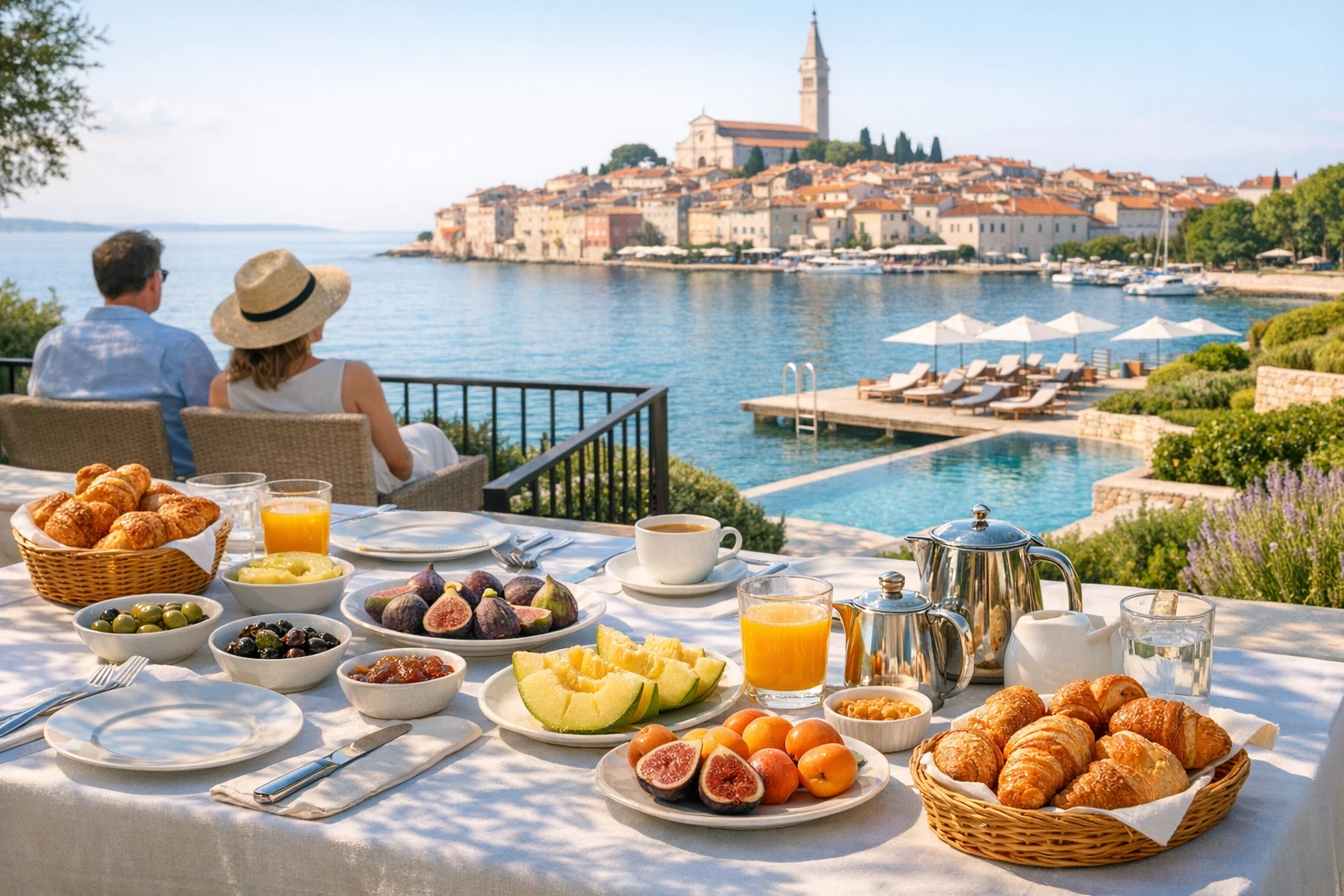
Another reason 2026 looks promising is accessibility. The Croatian coast remains reachable for a wide range of European travelers by short-haul flight, ferry connection, or car. For visitors from Central Europe especially, Croatia often offers a practical balance of travel time and scenery. Once you arrive, the visual payoff is immediate: pine-covered peninsulas, stone towns glowing in evening light, and beaches where the sea shifts from deep blue to pale green in a matter of meters. It is the sort of destination that feels cinematic without needing a script. If you want a resort holiday with convenience but not complete detachment from place, Croatia is worth serious consideration.
2. Choosing the Right Region: Istria, Kvarner, Dalmatia, and the Islands
The best all-inclusive resort in Croatia is not simply the one with the most amenities. It is the one in the right region for your pace, interests, and transport plan. Croatia’s coastline is long, varied, and surprisingly diverse, which means the experience in Istria can feel very different from a stay in central Dalmatia or on an island.
Istria, in the north, is often the easiest entry point for first-time visitors. It is particularly convenient for travelers arriving by car from Italy, Austria, Germany, or Slovenia, and it offers a polished mix of resort infrastructure, family hotels, and attractive towns such as Rovinj, Porec, and Umag. Beaches here are often rocky or platform-style rather than long sandy stretches, but the water is clear and the wider tourism system is well developed. Istria also tends to appeal to travelers who want day trips, cycling routes, olive oil tastings, and a slightly more relaxed pace than the busiest southern hotspots.
Kvarner, including areas around Rijeka and islands such as Krk, Rab, and Losinj, is another strong option for families and repeat Croatia visitors. It often feels greener and a little less crowded than the most famous Dalmatian zones, while still providing solid resort choices. Some properties here are especially good for travelers who want sea access, wellness facilities, and room to breathe rather than a heavy entertainment schedule.
Dalmatia is where the classic postcard image really takes over. Zadar, Sibenik, Split, and the Makarska Riviera all offer different versions of the Adriatic dream. Central Dalmatia is ideal for travelers who want dramatic coastal views, boat excursions, and easier access to major historic cities. South Dalmatia, including the Dubrovnik area, is visually spectacular but can be pricier, especially in peak summer.
If you are trying to match region to travel style, this quick guide helps:
Istria: best for first-time visitors, road trips, and families who want convenience
Kvarner: good for wellness stays, quieter trips, and mixed-age family groups
Central Dalmatia: ideal for island hopping, culture, and classic sea-view resort holidays
Southern Dalmatia: best for scenic splurge trips and travelers who prioritize atmosphere
Island resorts can be wonderful, but they require more planning. Ferry schedules, transfers, and luggage logistics matter more than they do on the mainland. For some travelers that adds romance; for others it adds friction. The sea may look equally inviting across the country, but the right region is what turns a pretty holiday into a genuinely well-matched one.
3. What “All-Inclusive” Usually Means in Croatia, and How It Compares with Other Mediterranean Destinations
One of the smartest things a traveler can do before booking a Croatian resort is to define the term “all-inclusive” very carefully. In Croatia, the label often covers buffet breakfast, lunch, dinner, selected local alcoholic and non-alcoholic drinks, and access to certain on-site activities. That sounds straightforward, but the details vary more than many guests expect. Some resorts include afternoon snacks, ice cream hours for children, beach loungers in designated areas, or sports courts. Others are closer to a full-board package with limited drinks and only a few extras.
This is where comparison helps. In Turkey, and at many larger resorts in Spain or Greece, all-inclusive can mean multiple bars, branded drinks, themed restaurants, late-night food, and a packed animation program. Croatia often feels lighter and more understated. The focus is usually on the setting rather than nonstop resort entertainment. That can be a strength if you want a calmer atmosphere and plan to explore nearby towns, coves, or islands. It can be a disappointment if you are expecting a giant self-contained complex where everything happens on site from morning aerobics to midnight shows.
Travelers should also look out for common limitations. Premium imported drinks may cost extra. A la carte restaurants are frequently excluded or only partially discounted. Parking, spa treatments, airport transfers, and certain water sports are often separate charges. Even beach setup can vary, especially if a resort uses a public or semi-public shore area nearby rather than a fully private beach club.
Before booking, it is wise to check the following points line by line:
- Are all meals included every day, or only breakfast and dinner on some rates?
- Which drinks are included, and during what hours?
- Are sunbeds, umbrellas, and pool towels free of charge?
- Is there a kids’ club, and is it seasonal or daily?
- Do specialty restaurants require an extra fee or advance reservation?
- Are local taxes or parking fees billed separately?
In practical terms, Croatia’s version of all-inclusive suits travelers who want budgeting simplicity, regular meals, and a resort base near the sea without paying for a hyperactive entertainment machine they may never use. Picture a holiday where breakfast is easy, afternoons drift between pool and coastline, and evenings may end with a short stroll into a harbor town rather than a loud theater show. That is often the Croatian sweet spot. It is less about excess and more about balance, and for many travelers that is precisely the attraction.
4. Budget, Season, and Booking Strategy for a Croatian All-Inclusive in 2026
Price is often the deciding factor in an all-inclusive holiday, and in Croatia the answer depends heavily on month, region, hotel category, and how early you book. Peak season remains July and August, when school holidays, warm sea temperatures, and strong demand drive rates upward. The shoulder season, especially late May, June, and September, is often the smartest value window for many travelers. Temperatures are usually pleasant, the sea is inviting by early summer and still warm in September, and the busiest roads, airports, and resort dining spaces are a little easier to navigate.
While exact 2026 prices will differ by property, the pattern is familiar: four-star coastal resorts with all-inclusive packages usually command a noticeable premium over room-only or half-board stays, and larger family rooms increase the gap further. It is common, though never guaranteed, to see shoulder-season prices come in roughly 15 to 30 percent below comparable peak-summer rates. That makes timing one of the most effective cost-saving tools available.
Booking strategy matters almost as much as destination choice. Families traveling in school-holiday periods should ideally start comparing options several months in advance, especially if they need interconnected rooms, child-friendly beaches, or airports with convenient flight times. Couples have more flexibility and can often find better value by targeting June or September and choosing adult-friendly resorts or quieter coastal pockets rather than the most famous towns.
When calculating your real budget, include more than the headline room rate. A Croatian all-inclusive stay may still involve these extra costs:
- Airport transfers or car rental
- Parking fees at the hotel
- Tourist tax, where applicable
- Premium drinks, spa treatments, and private cabanas
- Boat trips, national park visits, and excursions
- Ferry tickets if you choose an island property
Transport planning also shapes the final number. Pula, Rijeka, Zadar, Split, and Dubrovnik all serve different parts of the coast, and choosing the nearest airport can save both money and time. If you are driving, Istria and Kvarner are often more straightforward than southern Dalmatia. If you want to minimize transfers, mainland resorts usually beat island stays.
The best booking mindset for 2026 is neither bargain hunting at any cost nor paying extra for features you will not use. Instead, focus on value density: a good location, the right board basis, strong review history, and inclusions that match your travel habits. The cheapest rate is not always the best deal, and the most expensive package is not automatically the most satisfying.
5. Conclusion: Who Should Book a Croatian All-Inclusive in 2026?
Croatia is an excellent all-inclusive choice in 2026 for travelers who want the convenience of a resort holiday without giving up the sense of being somewhere distinctive. It works particularly well for families who appreciate predictable meal costs, easy pool time, and access to the sea without having to organize every detail day by day. Parents with younger children often benefit most when they choose resorts with sheltered swimming areas, family rooms, and straightforward transfer times from nearby airports. For them, the holiday becomes less about logistics and more about rhythm: breakfast, beach, nap, sunset, repeat.
Couples can also find strong value in Croatia, but the key is choosing the right mood. If you want nightlife-heavy resort entertainment, other Mediterranean markets may offer more options at scale. If, however, you prefer terraces above the water, evening walks through historic towns, and a calmer atmosphere, Croatia can be deeply rewarding. The country tends to suit travelers who enjoy scenery and comfort in equal measure. It is the kind of place where a resort stay and a destination stay can overlap rather than compete.
First-time visitors should keep their planning simple. Pick a mainland region with good access, read the inclusions carefully, and avoid assuming that every Croatian all-inclusive resort operates like a mega-complex elsewhere. Istria is often a wise starting point for convenience. Central Dalmatia is a strong choice for travelers who want a more dramatic coastal setting and easy excursion potential. Islands are best saved for those who do not mind an extra travel layer in exchange for atmosphere.
For the target audience of this guide, the clearest takeaway is this: Croatia is at its best when expectations are realistic and the match is thoughtful. Choose it if you want a beautiful Adriatic setting, practical resort comforts, and room to explore beyond the buffet. Choose it if your ideal holiday includes both lazy hours and memorable surroundings. And choose carefully, because in Croatia the best all-inclusive vacation is rarely the loudest one. More often, it is the one that lets the sea, the stone towns, and the slower evenings do the talking.