What Funeral Caskets Might Look Like in 2030
Introduction
Funeral caskets may seem like timeless objects, yet they are quietly changing with shifts in design, technology, sustainability, and personal values. By 2030, the casket could become less of a standard product and more of a meaningful choice shaped by culture, ecology, and new materials. Families are already asking for options that feel warmer, lighter, greener, and more personal than traditional models. Looking ahead offers a practical way to understand where funeral traditions may be headed next.
This article follows a simple outline before moving into detail. First, it examines how materials and environmental concerns may reshape casket construction. Next, it looks at changing design preferences, then at the role of digital features and memorial technology. After that, it considers pricing, regulation, and manufacturing trends, and it closes with a practical summary for families, planners, and funeral professionals.
Materials, Sustainability, and the New Physical Shape of the Casket
If one factor is likely to define the appearance of funeral caskets in 2030, it is the material story behind them. For decades, many buyers associated caskets with familiar categories: polished hardwood, painted metal, stainless steel, bronze, and interiors trimmed in satin or velvet. Those models are not going to vanish overnight, but the market is already moving toward broader choices. In the United States and many other countries, cremation rates have risen steadily for years, and that shift changes what families expect from a casket. A product designed for a brief viewing or ceremony does not need to be built in the same way as a casket intended for long-term burial in a vault. At the same time, green burial has moved from a niche idea to a serious option discussed by funeral homes, cemeteries, and consumers.
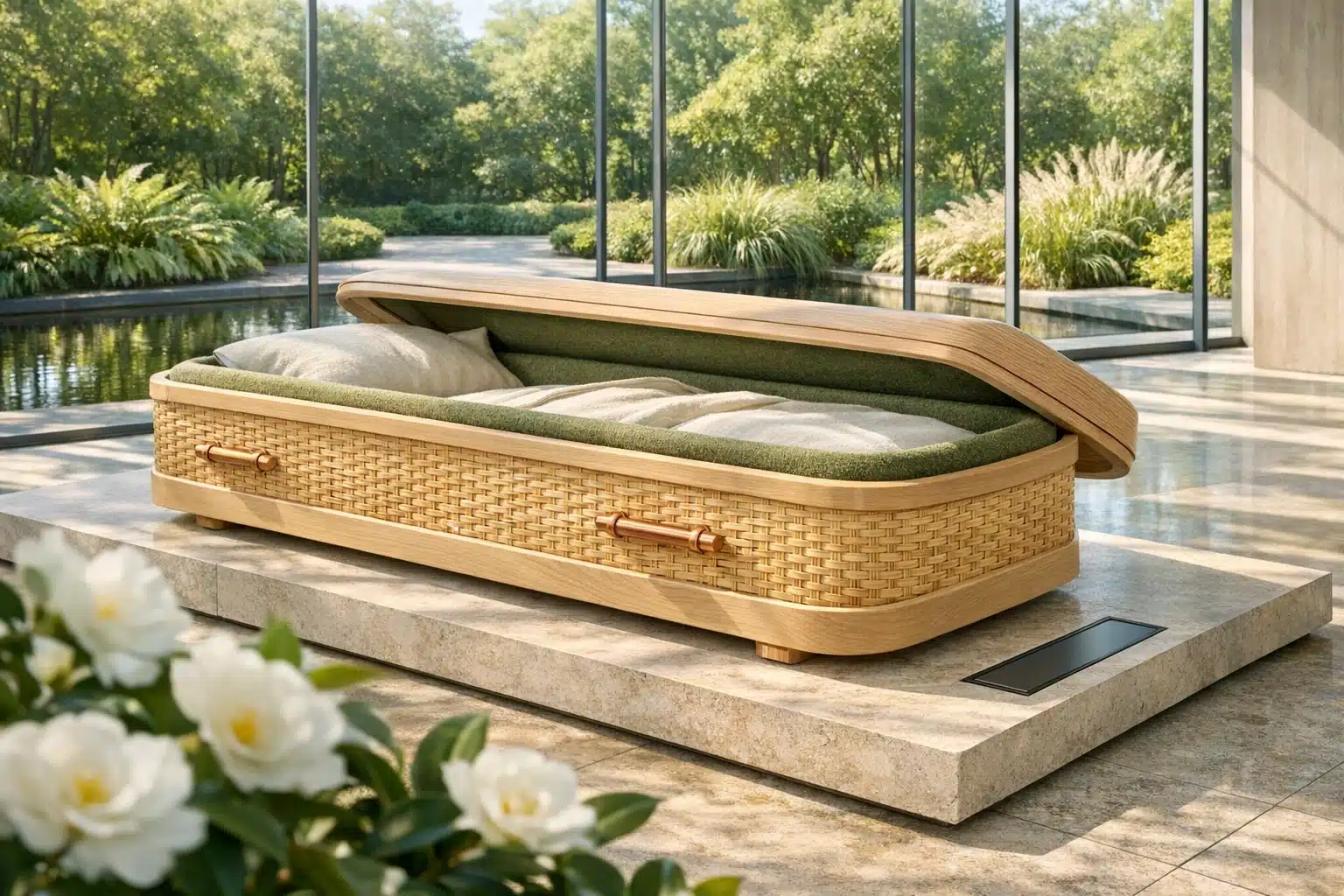
By 2030, many caskets may look simpler, softer, and more natural because the materials themselves will look that way. Bamboo, willow, rattan, cardboard composites, plantation-grown wood, mycelium-based panels, wool linings, and recycled fiberboard are all plausible candidates for wider use. Some are already on the market in limited form. The difference by 2030 may be scale, better finishing, and stronger design standards. Instead of rough, plainly utilitarian eco-products, manufacturers may offer elegant biodegradable models with smooth joins, muted earth colors, and carefully engineered strength.
Likely material directions include:
• FSC-certified or other responsibly sourced timber
• Water-based stains and low-emission finishes
• Recycled metal for hardware or decorative fittings
• Interior fabrics made from cotton, linen, hemp, or recycled textiles
• Adhesives designed to reduce toxic off-gassing
The visual effect could be striking. A 2030 casket may resemble well-made furniture more than a traditional showroom coffin, with visible grain, matte surfaces, rounded edges, and less heavy ornamentation. Some models may even be modular, allowing funeral homes to adjust outer panels, handles, or interior linings without replacing the entire unit. The image is less “sealed vault of formality” and more “carefully crafted vessel.” That change is practical as much as aesthetic. Lighter materials can reduce shipping costs, lower handling strain for staff, and fit the growing desire for lower-impact funerals. In a quiet but meaningful way, the casket of 2030 may begin to look like the values of the people choosing it: measured, thoughtful, and aware that beauty does not have to come wrapped in excess.
Design Trends: From Formal Uniformity to Personal Expression
Traditional funeral caskets often follow a familiar visual language: deep mahogany tones, brushed metal finishes, tufted interiors, symmetrical hardware, and a solemn palette built around bronze, silver, blue, cream, or white. That visual vocabulary still carries meaning for many families, especially where custom, religion, or local expectations favor a more classic presentation. Yet design in 2030 is likely to widen far beyond that formula. The casket may become one of the most personalized objects in the funeral process, not because families are chasing novelty, but because they increasingly want the ceremony to reflect a real life rather than a generic script.
That means caskets could adopt features borrowed from interior design, product design, and even hospitality aesthetics. Imagine gently curved corners instead of sharply defined edges, textured handles instead of ornate metal bars, fabric choices inspired by home décor, and lids or side panels that can be customized without making the object feel theatrical. Some future models may use interchangeable exterior sleeves or panels, allowing one base structure to support different visual styles. A family could choose a minimalist oak finish, a color-washed botanical pattern, or a panel printed with a landscape, artwork, military insignia, or religious symbol, provided local rules and printing capabilities allow it.
The biggest comparison is not old versus new, but standard versus meaningful. In 2030, families may choose among:
• understated natural finishes for green or contemporary ceremonies
• culturally specific motifs that reflect heritage and ritual
• photo or art panels for highly personalized memorials
• textile-forward interiors that feel less synthetic and more comforting
• child-sized or infant caskets designed with sensitivity rather than decorative excess
Another likely shift is emotional tone. The casket may look less severe. Designers understand that many families are no longer drawn to visual weight for its own sake. A warm cherry finish, pale ash wood, or soft moss green interior can change the atmosphere of a room. It does not remove grief, but it can soften the setting in which grief is expressed. In that sense, the 2030 casket may act less like a fixed symbol of death and more like a carefully chosen frame for remembrance. The result could be more humane and more varied. One casket might look nearly Scandinavian in its simplicity, while another might carry the ornate detail of a faith tradition. Both would serve the same purpose, but the range of acceptable design language will almost certainly be broader than it is today.
Technology and Memory Features That May Be Built In
The phrase “smart casket” can sound futuristic to the point of absurdity, yet some technology-related features are already common around funerals. Memorial websites, livestreamed services, online guestbooks, digital photo tributes, and QR-coded grave markers have moved into mainstream use. By 2030, funeral caskets themselves may include modest, useful forms of technology, though probably not in the flashy, gadget-heavy sense that science fiction likes to imagine. Most families and funeral directors still want dignity, reliability, and ease, not a piece of electronics that distracts from the ceremony.
What may become normal is low-profile integration. A casket handle or identification plate might include an NFC chip or a QR code linked to an obituary, a memorial page, family-approved photos, service details, or donation links. Funeral homes may also use digital identification tools for chain-of-custody accuracy, transport documentation, and cremation tracking. These features are practical, and they reduce the risk of paperwork errors in a setting where accuracy matters enormously.
Some higher-end 2030 models may include removable digital elements used only during the service. An e-ink display panel, for example, could show a name, dates, a favorite quote, military service information, or a symbol chosen by the family. Because e-ink uses little power and reads like printed text, it would fit the tone better than a glowing screen. Similar removable devices might display a changing floral motif, a faith-based message, or multilingual text for culturally mixed families. The key idea is restraint.
Possible digital features could include:
• QR or NFC memorial access points
• digital chain-of-custody identification for funeral operations
• removable e-ink tribute plates for services
• optional audio memory modules in ceremonial display units, not in buried caskets
• documentation tools connected to cemetery or crematory systems
Still, there are boundaries. Privacy, cybersecurity, and taste will matter. Many families will not want personal data tied too closely to a physical object, especially if public scanning is possible. Burial environments are also hard on electronics, so long-term embedded tech may remain limited. That is why the most realistic future is a hybrid one: discreet technology for identification, memorial access, and ceremony support, combined with traditional craftsmanship. The casket of 2030 may not beep, glow, or speak. More likely, it will carry hidden layers of information, like a quiet archive beneath a polished surface, there when needed and invisible when not.
How Cost, Regulation, and Manufacturing Will Shape What Families Actually See
It is easy to imagine the future in terms of design ideals, but caskets in 2030 will be shaped just as strongly by economics, supply chains, and regulation. Funeral products do not exist in a vacuum. They are affected by timber availability, metal prices, shipping costs, labor expenses, cremation growth, cemetery rules, and consumer demand for transparent pricing. In the United States, for example, the Federal Trade Commission Funeral Rule requires funeral providers to give price information and allows consumers to buy caskets from third parties rather than only from the funeral home. That matters because greater price comparison tends to push manufacturers toward clearer product tiers and more standardized descriptions.
By 2030, the casket market may split more visibly into three broad groups. The first will be affordable, efficient products for direct cremation or simple services. These may use lighter engineered wood, corrugated materials, or low-cost veneers with cleaner design than budget caskets often have today. The second group will be mid-range personalized caskets, where families choose finish, lining, handles, and symbolic details. The third will be premium or artisanal models, produced in smaller numbers with custom woods, specialized metalwork, or fully bespoke design elements.
Manufacturing itself may also change the look of caskets. Computer-controlled cutting, better digital finishing tools, and shorter-run production make customization easier than it once was. Local or regional workshops may produce more made-to-order units instead of relying only on large national inventories. Flat-pack ceremonial caskets or partially assembled models could become more common where shipping efficiency matters. Hardware may be 3D printed or cast in smaller batches, opening the door to more distinctive but affordable decorative details.
Important forces that may influence appearance and availability include:
• stricter emissions and material disclosure standards
• cemetery or crematory rules about acceptable construction
• growth in online comparison shopping
• pressure for lower delivery costs and faster lead times
• demand for clearer pricing without sales confusion
What does this mean visually? It means some of the caskets families see in 2030 may look cleaner because they are designed for manufacturing efficiency, while others may look more individual because customization is easier to deliver. In other words, the future market is likely to produce both simplicity and variety at once. The glossy showroom of the past may not disappear, but it may stand beside digital catalogs, locally crafted options, rental ceremonial shells, and greener alternatives that meet legal and operational needs without copying yesterday’s form.
Conclusion: What Families and Funeral Professionals Should Expect by 2030
For families, the most important takeaway is that funeral caskets in 2030 will probably offer more choice, not less. The decision may no longer begin with a narrow wall of nearly identical metal and wood models. Instead, buyers are likely to encounter a wider spectrum of options shaped by values: sustainability, cost control, cultural fit, visual warmth, personalization, and digital convenience. That wider menu can be helpful, but it can also feel overwhelming if no one explains the trade-offs clearly. Funeral professionals will have a bigger role in guiding people through those choices with honesty and context.
For funeral homes, cemeteries, and planners, the likely challenge is balance. They will need to carry products that satisfy tradition while also responding to changing expectations. Some families will still want a formal bronze-toned casket with a classic interior and familiar proportions. Others will ask for bamboo, printed panels, biodegradable fittings, or a memorial link embedded in the nameplate. Both requests are reasonable, and the businesses that adapt well will probably be the ones that present options clearly rather than treating one style as normal and everything else as unusual.
By 2030, the smartest questions may not be “What is the finest casket?” or “What is the most modern casket?” but rather:
• What type of service is being planned?
• Is burial, cremation, or green burial involved?
• Which materials match the family’s priorities?
• Does personalization add meaning or only cost?
• Are there cemetery, faith, or legal requirements to consider?
The casket of 2030 may look more natural, more customized, and more thoughtfully made than many people expect. It may use lighter materials, softer lines, and subtle technology. It may sit in a room not as an intimidating object, but as part of a farewell designed with intention. That is the real shift. The future of caskets is not only about appearance. It is about making one of the hardest purchases a family will ever face feel more transparent, more personal, and more in tune with the life being remembered.