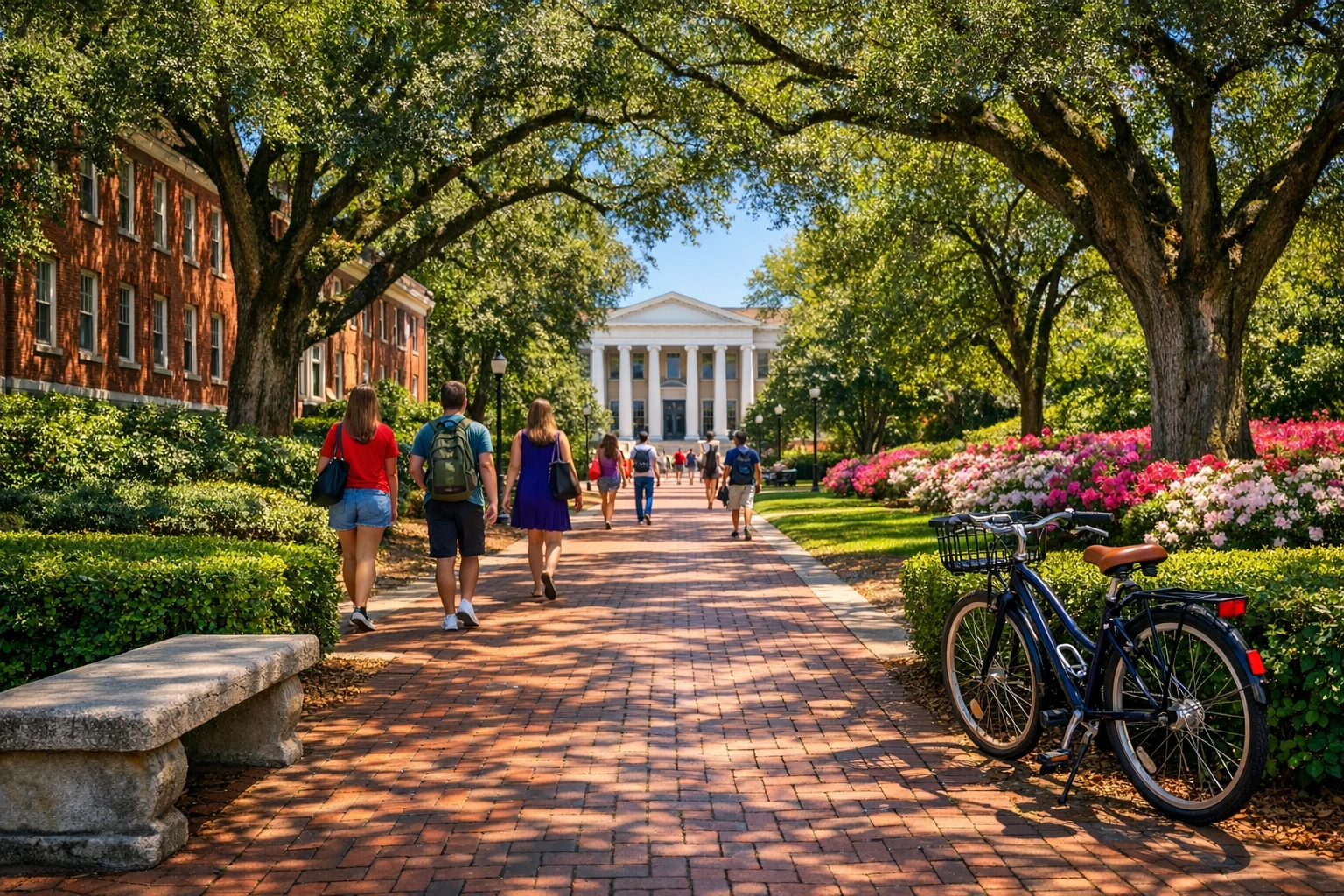
Top 5 Colleges in Georgia
Introduction
Choosing a college in Georgia can feel like scanning a skyline at dusk: every campus glows for a different reason. Some students want elite research labs, others care more about small classes, strong mentoring, or a lively college town that feels instantly like home. This guide looks at five standout institutions in the state and explains what truly sets each one apart. If you are comparing prestige, value, culture, and career momentum, this ranking gives you a practical place to start.
Outline
• Emory University: a nationally respected private university known for research, medicine, and strong humanities programs.
• Georgia Institute of Technology: a public powerhouse for engineering, computing, business, and return on investment.
• University of Georgia: the flagship public university with broad academics, school spirit, and a huge alumni network.
• Spelman College: a leading liberal arts college with a historic mission, close community, and leadership focus.
• Mercer University: a well-rounded private university that combines personal attention with strong professional pathways.
This list is based on academic reputation, range of programs, access to opportunity, campus environment, and likely career outcomes after graduation. No ranking can be perfect for every student, but these five colleges consistently stand out in Georgia for quality, influence, and the kind of college experience that keeps paying off long after move-in day.
1. Emory University: Prestige, Research, and a Thoughtful Academic Culture
Emory University earns a place near the very top of almost any discussion about colleges in Georgia because it combines national prestige with unusual academic range. Located in the Atlanta area, Emory is a private research university with deep strengths in the health sciences, business, public health, law, and the liberal arts. Founded in 1836, it has built a reputation for serious scholarship without losing the human scale that many students want from a campus. In practical terms, that means undergraduates can benefit from high-level faculty, strong institutional resources, and access to world-class research settings while still feeling that they are part of a real academic community rather than just a number in a system.
One of Emory’s biggest advantages is its connection to the medical and public health world. Its proximity to major healthcare institutions and the Centers for Disease Control and Prevention gives students unusual exposure to internships, research projects, and professional networks. For pre-med students, biology majors, neuroscience students, and anyone interested in public health, that location matters. It turns the city into an extension of the classroom. At the same time, Emory is not only for future doctors. Its programs in English, political science, economics, religion, and international studies are also highly regarded, which makes it a balanced choice for students who want both intellectual breadth and respected credentials.
Compared with Georgia Tech, Emory feels less engineering-driven and more interdisciplinary. Compared with the University of Georgia, it is smaller, more selective, and more private in tone. That difference shapes the student experience. Emory often appeals to students who value discussion-heavy classes, close faculty engagement, and a campus culture that leans academically ambitious without being overwhelmingly defined by one field. A few of its notable strengths include: • strong undergraduate research access • nationally recognized health and medical connections • a polished campus environment near Atlanta • broad options across sciences, humanities, and social sciences
Cost is an important factor, and as a private university, Emory is not inexpensive. Even so, many families consider it worth serious attention because of its reputation, financial aid options, and career outcomes. Graduates often move into medicine, consulting, law, business, research, and nonprofit leadership. There is also a certain quiet confidence to the school. Emory does not always market itself with the flashiest personality, but it consistently delivers substance. For students who want a rigorous education, national recognition, and the advantages of a major city without surrendering the feeling of an intentional campus, Emory is one of the strongest choices in Georgia.
2. Georgia Institute of Technology: Innovation, Engineering, and Career Momentum
If Emory is a carefully tuned orchestra, Georgia Tech is a launchpad with a heartbeat. Officially the Georgia Institute of Technology, this Atlanta-based public university is one of the most respected technology and engineering schools in the United States. Founded in 1885, Georgia Tech has grown into a major research institution known for engineering, computer science, data science, business, architecture, and applied sciences. For students who want a practical education with clear industry relevance, it is hard to ignore. Its brand is strong not only in Georgia, but nationally and internationally, especially in fields where technical skill and analytical thinking drive hiring decisions.
Georgia Tech’s appeal begins with academic rigor, but it does not end there. Employers know the name, and that recognition can translate into internships, co-ops, and job interviews. Atlanta adds another advantage. As a major metro area with a growing technology and business ecosystem, it gives students access to companies, startups, research labs, and professional events throughout the year. Tech students often build resumes early, sometimes long before graduation. That is a major point of contrast with colleges where professional exposure arrives later or less consistently. For high-achieving students interested in engineering, cybersecurity, artificial intelligence, industrial design, or operations research, Georgia Tech can feel less like a campus and more like a training ground for ambitious futures.
What sets Georgia Tech apart from many competitors in the state is return on investment. Because it is a public university, in-state tuition can make it especially appealing for Georgia residents who want elite-level academic strength at a lower cost than comparable private institutions. The student culture is often described as demanding, collaborative, and intensely focused. That does not mean life is all equations and late-night coding sessions, but it does mean the academic pace is real. Students who thrive here usually enjoy challenge and are comfortable being surrounded by equally driven peers. Some standout features include: • nationally elite engineering and computing programs • strong internship and co-op pipelines • excellent value for in-state students • deep ties to industry and entrepreneurship
Compared with Emory, Georgia Tech is more specialized and quantitatively oriented. Compared with UGA, it offers less of the traditional college-town atmosphere but a more concentrated reputation in STEM. It is also broader than some people assume, with business, public policy, design, and interdisciplinary programs that connect technology to real-world systems. Still, its identity remains anchored in innovation. Students who want a college where ideas are tested, built, debugged, and deployed will find Georgia Tech compelling. It is not the right fit for everyone, especially those who want a softer academic pace or a classic liberal arts environment, but for technical talent with drive, it stands as one of the most powerful educational options in Georgia.
3. University of Georgia: A Flagship Experience with Breadth, Tradition, and Opportunity
The University of Georgia, commonly called UGA, holds a special place in the state’s educational landscape. Founded in 1785, it is one of the oldest public universities in the United States and remains the flagship institution of Georgia’s university system. Located in Athens, UGA offers something many students still want even in an era of niche specialization: a full-scale college experience with substantial academic choice. Its strengths run across business, journalism, public affairs, agriculture, life sciences, education, fine arts, and many other fields. When students say they want options, UGA is often exactly what they mean.
One of UGA’s greatest advantages is breadth without anonymity. Yes, it is a large public university, but it has developed honors programs, living-learning communities, undergraduate research opportunities, and strong academic departments that help many students make a very large institution feel more navigable. Terry College of Business is especially well known, and the Grady College of Journalism and Mass Communication has long enjoyed a national reputation. That balance matters. A student can arrive undecided and still find a serious path. In fact, that flexibility is one of UGA’s strongest selling points when compared with more specialized schools like Georgia Tech or more selective private environments like Emory.
Then there is Athens, which deserves some credit of its own. College towns shape student experience in ways brochures never fully capture, and Athens is one of the most beloved in the South. It offers music, restaurants, walkable energy, and a rhythm of student life that feels lively without needing a major city to sustain it. School spirit is also a real part of the equation. UGA athletics, traditions, and alumni pride create a sense of belonging that many students value just as much as classroom learning. A few reasons students keep UGA high on their list are: • broad academic options across many majors • strong honors and research opportunities • a vibrant college-town setting in Athens • extensive alumni connections throughout Georgia and beyond
UGA may not match Georgia Tech’s intensity in engineering or Emory’s private-university atmosphere, but it offers a more rounded and adaptable platform than either for many students. It is particularly strong for those who want a respected degree, a traditional campus life, and access to a huge network after graduation. Because it is a public institution, cost can also be attractive for in-state students, especially when combined with scholarships. UGA works well for students who want room to explore, room to grow, and enough campus energy to make the next four years memorable. In a state with several excellent colleges, UGA remains one of the most complete and appealing choices.
4. Spelman College: Leadership, Community, and Liberal Arts Excellence
Spelman College is one of the most distinctive institutions in Georgia and one of the most respected liberal arts colleges in the country. Located in Atlanta and founded in 1881, Spelman is a historically Black college for women with a mission that has shaped generations of leaders, scholars, artists, scientists, and public servants. To rank colleges fairly, it is important not to confuse size with significance. Spelman is smaller than UGA or Georgia Tech, but its influence reaches far beyond campus boundaries. Students who choose Spelman are often drawn by its combination of academic seriousness, cultural legacy, close mentorship, and a clear sense of purpose.
What makes Spelman remarkable is the environment it creates. At many colleges, students have to search for community while also building confidence. Spelman is known for doing both at once. The college emphasizes leadership, identity, service, and intellectual growth in a setting where many students feel seen rather than sorted. That matters deeply, especially in undergraduate education, where confidence can affect everything from classroom participation to internship ambition. As part of the Atlanta University Center Consortium, Spelman students also benefit from connections with neighboring institutions, expanding both course options and social networks while keeping the intimacy of a smaller campus.
Academically, Spelman is strongest in the liberal arts and sciences, and it has earned recognition for producing graduates who move into medicine, research, law, education, business, and public leadership. Compared with Emory, Spelman is smaller and more mission-centered. Compared with UGA, it offers a very different experience: less about scale and tradition, more about focused mentorship and cultural grounding. That difference is not minor. It can define the entire college journey. Students often point to strengths such as: • close relationships with professors and advisers • a mission-driven campus culture • strong preparation for graduate and professional study • access to the broader opportunities of Atlanta
Spelman will not be the ideal fit for everyone, and that is precisely why it stands out. The best colleges are not generic; they know what they are. Spelman knows. It offers a rigorous education in an environment built to cultivate leadership and self-definition, especially for Black women seeking a college experience that combines academic challenge with a powerful sense of belonging. In a ranking focused on overall quality and impact, Spelman deserves inclusion not as a symbolic choice, but as a genuinely outstanding one. For the right student, it can be transformative in ways that are hard to measure and impossible to dismiss.
5. Mercer University: Personal Attention, Professional Pathways, and a Broad Private-University Experience
Mercer University may not always dominate national conversations in the way Emory or Georgia Tech does, but it remains one of Georgia’s strongest and most versatile colleges. Founded in 1833, Mercer is a private university with a long history and a footprint that extends across several Georgia locations, including Macon and Atlanta. Its appeal lies in combination rather than spectacle. Mercer offers smaller classes, a more personal learning environment, and strong programs in fields such as business, law, medicine, engineering, education, and the health professions. For students who want serious academics without feeling absorbed by a giant institution, Mercer fills an important space in the state.
One of Mercer’s clearest strengths is access. At a school of its size, undergraduates can often build closer relationships with professors, participate in campus leadership more quickly, and receive more direct advising than they might at a larger public university. That kind of attention can be especially valuable for first-generation college students, students exploring multiple interests, or anyone who benefits from a campus where names are remembered. Mercer also balances liberal learning with professional preparation. It is not a narrow vocational school, but it does a notably good job connecting classroom work to careers. That is one reason it continues to attract students who want both community and momentum.
Compared with Spelman, Mercer is broader in institutional structure and coeducational. Compared with UGA, it is smaller and more guided. Compared with Emory, it tends to offer a less nationally elite profile but a more accessible and often more personal atmosphere. These distinctions matter because college success is not built only on rankings; it also depends on match. Mercer’s strengths often show up in areas such as: • smaller class sizes and more individualized support • respected professional and graduate pathways • a campus culture that values service and leadership • strong options for students who want private-school structure without the scale of a major research giant
Mercer is especially worth considering for students who want a campus where ambition does not have to come with impersonality. It offers credibility, tradition, and a practical orientation that can serve a wide range of goals. While it may not carry the same instant national shorthand as the very top-name institutions, it often makes up for that with student experience and fit. For future teachers, healthcare professionals, business students, and those looking for a close-knit university with clear professional direction, Mercer can be an excellent choice. In a top-five list for Georgia, it earns its place by delivering substance, stability, and opportunity in a format many students genuinely prefer.
Conclusion: Which Georgia College Fits You Best?
The strongest college in Georgia is not automatically the strongest college for you. If you want elite private research and exceptional health-science connections, Emory deserves a close look. If engineering, computing, and industry access matter most, Georgia Tech is difficult to beat. If you want the classic flagship experience with huge academic variety and a thriving college town, UGA stands out. If you value a mission-driven liberal arts environment with deep cultural significance and close mentorship, Spelman is exceptional. If you prefer smaller classes and a supportive private-university setting with clear professional pathways, Mercer makes a compelling case.
For students and families, the smartest next step is to move beyond brand recognition and compare real fit: majors, class size, campus location, costs, support systems, internship access, and the kind of daily environment in which you do your best work. Georgia is fortunate to have colleges that serve very different goals without sacrificing quality. That means the right choice is likely not the flashiest campus on paper, but the one where your abilities, interests, and ambitions can actually grow. Use this list as a map, then test it against your own priorities before making the final call.