A Practical Guide to Buying Used Industrial Tools
Outline and Introduction to the Used Industrial Tool Market
Buying used industrial tools can feel like walking into a machine room after the lights flick on: everything looks solid, but only careful inspection reveals what will truly perform. For manufacturers, contractors, fabricators, and maintenance teams, the secondhand market offers access to capable equipment at a lower upfront cost. It also raises real questions about wear, safety, parts support, and total ownership expense. This guide maps the buying process so readers can compare options with confidence instead of gambling on price alone.
Used industrial tools matter because they sit at the intersection of cost control, operational uptime, and practical resource use. New equipment often brings factory support, predictable specifications, and the appeal of untouched components, yet it also comes with higher prices and, in some product categories, long lead times. By contrast, used tools can be available immediately and may allow a smaller firm to purchase a higher-grade model than its new-equipment budget would normally permit. A professional shop that cannot justify a new hydraulic press, for example, may still be able to buy a carefully maintained used one with enough remaining service life to handle production for years.
This article is organized to help readers move from broad understanding to decision-ready action. The outline below shows the path:
- Why businesses choose used industrial tools and where the real value appears
- Which tool categories are commonly bought used, and how their risks differ
- How to inspect condition, verify safety, and judge remaining working life
- How to think about sourcing, pricing, logistics, and long-term ownership
The goal is not to romanticize secondhand buying or dismiss the advantages of new equipment. Instead, the purpose is to build a clear framework for decision-making. In industrial settings, a tool is not just an object on a shelf; it is part of a workflow, a safety system, and a cost structure. The best purchase is rarely the cheapest listing. It is the tool that fits the job, survives real use, and does not surprise the buyer with avoidable downtime. With that perspective in mind, the sections that follow examine both the promise and the pressure points of buying used industrial tools.
Why Businesses Buy Used Industrial Tools and When the Decision Makes Sense
The strongest argument for buying used industrial tools is straightforward: lower upfront cost can unlock capability sooner. In many secondary markets, used equipment sells for a fraction of its original purchase price, especially after the steepest period of depreciation has already passed. For a machine shop, repair facility, or contractor working with a fixed capital budget, that price gap can mean the difference between delaying an expansion and taking on new work immediately. A used magnetic drill, pipe threader, air compressor, or welding power source may deliver enough performance to support revenue-generating tasks without the burden of new-equipment financing.
Cost, however, is only one part of the story. Availability is another major factor. When production schedules are tight, businesses often value speed almost as much as price. New industrial tools, especially specialty items or imported models, can involve shipping delays, factory backlogs, or custom configuration timelines. A used tool located nearby may be purchased, inspected, and deployed in days rather than weeks. That compressed timeline matters to maintenance teams facing downtime, fabricators ramping up a contract, or field crews needing a backup unit before the next job begins.
There is also a practical quality argument in favor of used purchases. In many industries, older professional-grade tools were built for long service cycles and repairability. A robust cast-iron drill press or a heavy-duty gearbox-driven mixer may outlast lighter modern designs aimed at lower price points. The used market can therefore act like a hidden library of durable equipment, where yesterday’s premium build becomes today’s affordable workhorse.
Still, used buying is not always the right call. It makes the most sense when the tool is mechanically simple, inspectable, and supported by available parts or local service. It becomes riskier when software, calibration, proprietary electronics, or regulatory compliance play a central role. The comparison often looks like this:
- Used is often attractive for durable shop tools, standard fabrication equipment, and rugged portable gear with visible wear points.
- New may be wiser for precision instruments, heavily computerized systems, or equipment with strict certification demands.
- Used can be ideal for backup capacity, occasional work, and pilot projects.
- New can be more suitable for mission-critical processes where failure costs far exceed purchase savings.
In other words, buying used is not about chasing bargains for their own sake. It is a strategy for matching budget, urgency, and operational risk. When those elements line up, a secondhand industrial tool can offer real value without compromising productivity.
Major Categories of Used Industrial Tools and How to Match Them to the Job
Not all used industrial tools age in the same way, and that is why category matters. A buyer who evaluates every listing with the same standards is likely to miss both hidden advantages and serious defects. Broadly speaking, used industrial tools fall into several common groups: manual hand tools, portable power tools, pneumatic and hydraulic tools, welding and cutting equipment, stationary shop machinery, and measuring or diagnostic instruments. Each group carries a different balance of durability, wear, and replacement cost.
Manual hand tools are usually the easiest place to begin. Torque wrenches, pullers, vises, clamps, crimpers, pipe wrenches, and mechanic’s sets can offer excellent value if they are structurally sound and free from abusive wear. Their simplicity works in the buyer’s favor. A bent handle, rounded fastener surfaces, cracked castings, or damaged ratchet teeth are often easy to spot. The risk rises when calibration is essential, as with torque tools or specialty gauges, because visual inspection alone does not confirm performance.
Portable power tools require a different lens. With drills, grinders, rotary hammers, saws, and impact tools, the buyer must look beyond cosmetic appearance. A tool may look clean and still hide motor issues, bearing wear, brush problems, switch failure, or battery-system limitations. Corded models are often easier to assess over time because battery platforms can become obsolete. Pneumatic tools can be excellent used purchases in shops that already maintain dry, clean air systems, but seal wear and lubrication history matter greatly. Hydraulic tools, such as crimpers or torque equipment, deserve especially careful inspection for leaks, hose condition, and pressure integrity.
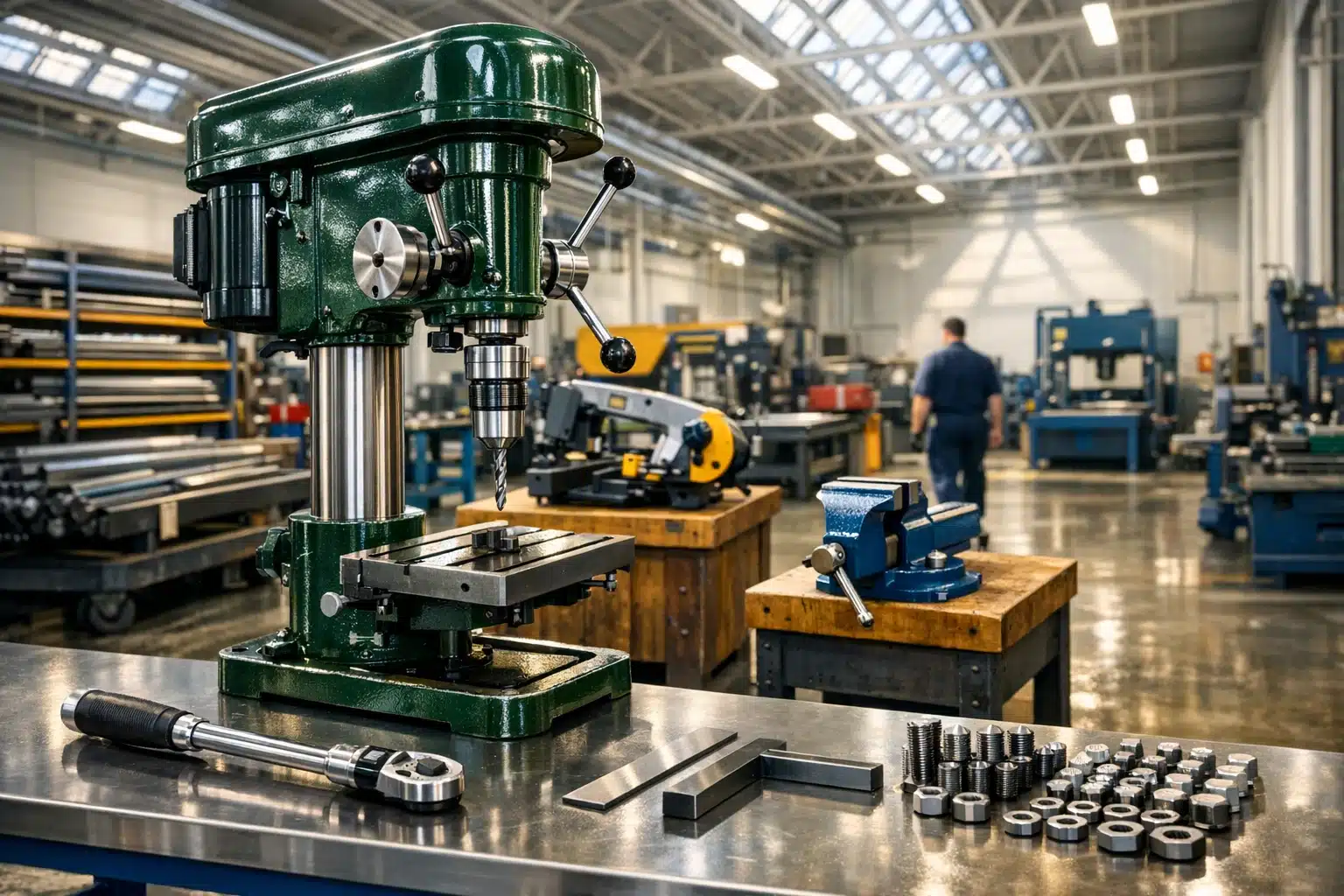
Stationary machinery sits in another category altogether. Used drill presses, band saws, presses, arbor equipment, weld positioners, and metalworking tables can be smart buys because their mass and simpler mechanics often translate into long service lives. Yet large machines can also conceal alignment issues, worn ways, spindle runout, or improvised repairs. Measuring equipment is even more sensitive. Calipers and micrometers may be affordable used, while higher-precision indicators, laser tools, or electronic testers demand stricter verification.
When matching a tool to the job, buyers should ask:
- Will this tool run continuously, intermittently, or only as a backup?
- Does the work require precision, raw power, or portability?
- Are parts, accessories, and consumables still widely available?
- Can the tool be tested under realistic operating conditions?
The best fit usually emerges from workload, not from excitement. A lightly used industrial grinder for occasional maintenance differs from a grinder expected to run every shift. Once the job is defined clearly, the right used category becomes much easier to identify.
How to Inspect Condition, Verify Safety, and Estimate Remaining Service Life
Inspection is the moment when used industrial tool buying becomes less guesswork and more discipline. A serious buyer should treat every purchase as a small investigation. Start with the basics: model number, serial number, manufacturer information, rated capacity, and any available maintenance records. Those details help confirm age, track parts availability, and reveal whether the tool has been supported properly. If a seller cannot answer basic questions about ownership history, service, or usage, that is not automatic proof of a bad deal, but it is a signal to slow down.
Visual inspection comes next, and it should be systematic. Look for cracks, bent frames, corrosion, heat discoloration, frayed cords, damaged plugs, leaking seals, missing fasteners, and signs that guards or covers were removed and never replaced. Uneven paint can suggest repairs, while spotless exterior cleaning may sometimes be an attempt to distract from harder-to-see issues. On stationary equipment, inspect slides, bearings, chucks, spindle movement, belts, wheels, and mounting points. On portable tools, check trigger feel, housing integrity, ventilation openings, and accessory interfaces.
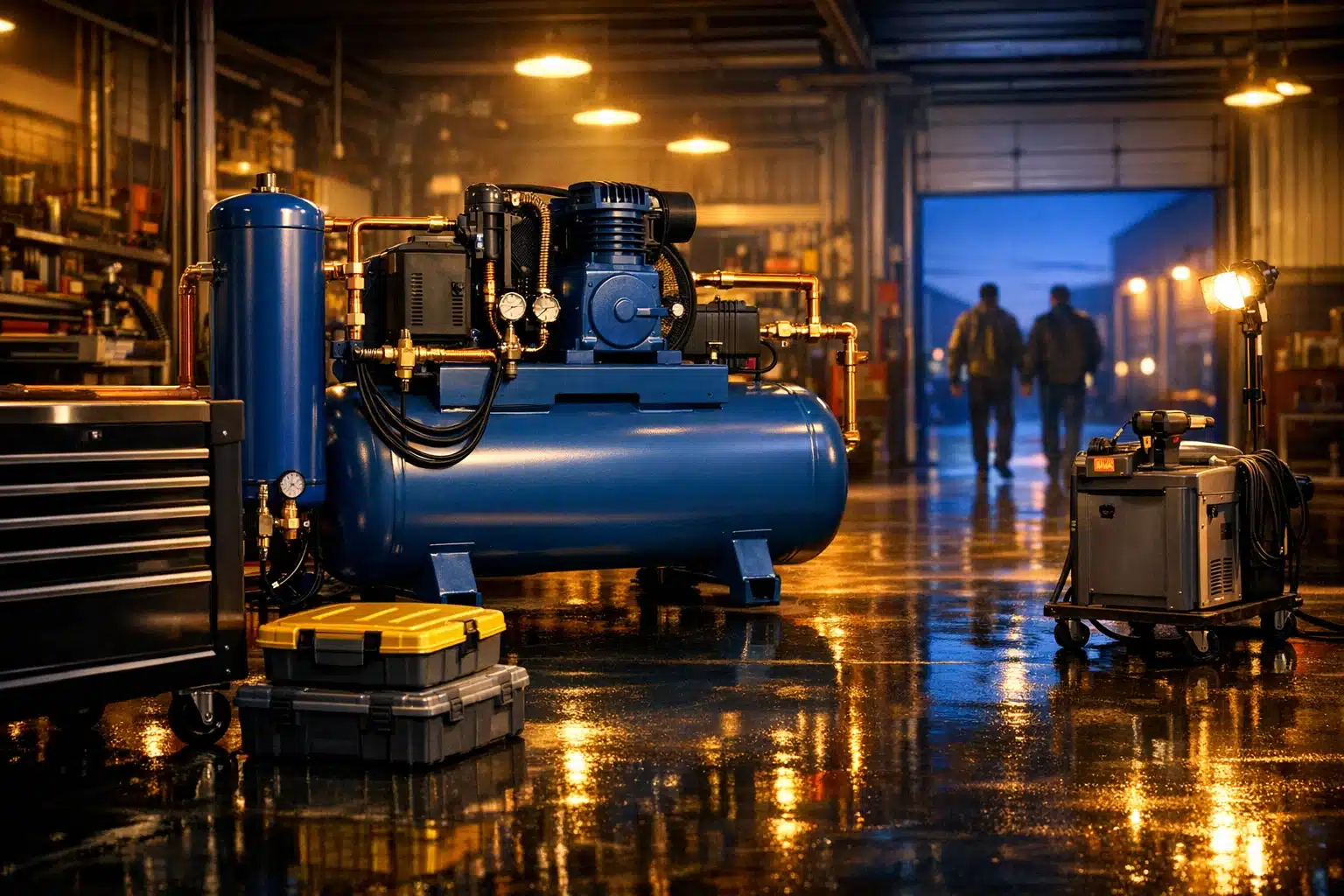
Function testing is even more important than appearance. If possible, power the tool on and observe startup behavior, operating sound, vibration, temperature rise, and shutdown response. A healthy industrial tool usually sounds consistent. Grinding noises, unstable speed, fluid leaks, or excessive heat often point to wear that will not stay cheap for long. For welding units, check arc stability and feeder performance. For compressors, observe pressure build time and listen for leaks. For press equipment, verify smooth travel and proper return. For measuring tools, compare readings against known references or recent calibration documents.
Safety should never be treated as an afterthought simply because the purchase price is low. Industrial buyers should confirm that emergency stops, guards, interlocks, shields, handles, and lockout-related features are present where applicable. Compliance requirements vary by tool, workplace, and jurisdiction, so buyers should review the relevant standards and site rules before putting any used equipment into service. A bargain stops being a bargain very quickly when it creates injury risk or fails internal safety review.
Several red flags deserve extra attention:
- Missing guards, labels, or electrical grounding features
- Evidence of heavy overheating or repeated impact damage
- Obsolete control components with no practical parts path
- Non-original modifications that affect safety or rated capacity
- No opportunity to test the tool under load
The best question to ask is not simply, “Does it run?” The better question is, “Can it perform reliably, safely, and economically in my actual workflow?” That shift in thinking often separates a sound purchase from an expensive lesson.
Conclusion for Shop Owners, Contractors, and Maintenance Teams
For the people most likely to buy used industrial tools, the final decision usually comes down to a blend of urgency, budget, and consequences. A small fabrication shop may need more capacity without taking on heavy debt. A contractor may want a backup core drill or generator that does not sit idle as expensive new inventory. A maintenance department may need a dependable press, pump, or torque tool now, not after a long procurement cycle. In all of these cases, used equipment can be a practical answer, but only when the purchase is managed with structure rather than optimism.
Where you buy matters almost as much as what you buy. Dealers often charge more, yet they may provide inspection notes, limited warranties, or some after-sale support. Auctions can offer strong pricing, but buyers usually accept more risk and must move quickly. Local surplus sales and plant liquidations sometimes produce excellent finds, especially when the tool comes from a clean industrial environment with visible maintenance culture. Online marketplaces widen selection, though they make inspection discipline even more important because photographs rarely tell the whole story.
A smart buyer also calculates total cost of ownership instead of stopping at the list price. The real number includes transportation, rigging, installation, replacement parts, tooling, calibration, operator training, maintenance catch-up, and possible downtime during commissioning. A used tool priced at 40 percent of a new equivalent may still become the more expensive choice if it needs extensive repair or lacks available accessories. On the other hand, a slightly higher-priced unit from a reputable source can save money by reaching production faster and needing less corrective work.
Before committing, it helps to follow a simple closing checklist:
- Confirm the exact model, capacity, and included accessories
- Test the tool or request clear operating evidence
- Price critical replacement parts before purchase
- Plan freight, installation space, and electrical or air requirements
- Document the condition at pickup or delivery
The clearest takeaway for industrial buyers is this: used tools are not second-rate by definition, and new tools are not automatically the most rational choice. The strongest outcomes come from matching the tool to the workload, verifying condition with care, and understanding the full operating cost after purchase. If you approach the used market with patience and a checklist instead of impulse, it can become less of a gamble and more of a disciplined way to build capability.