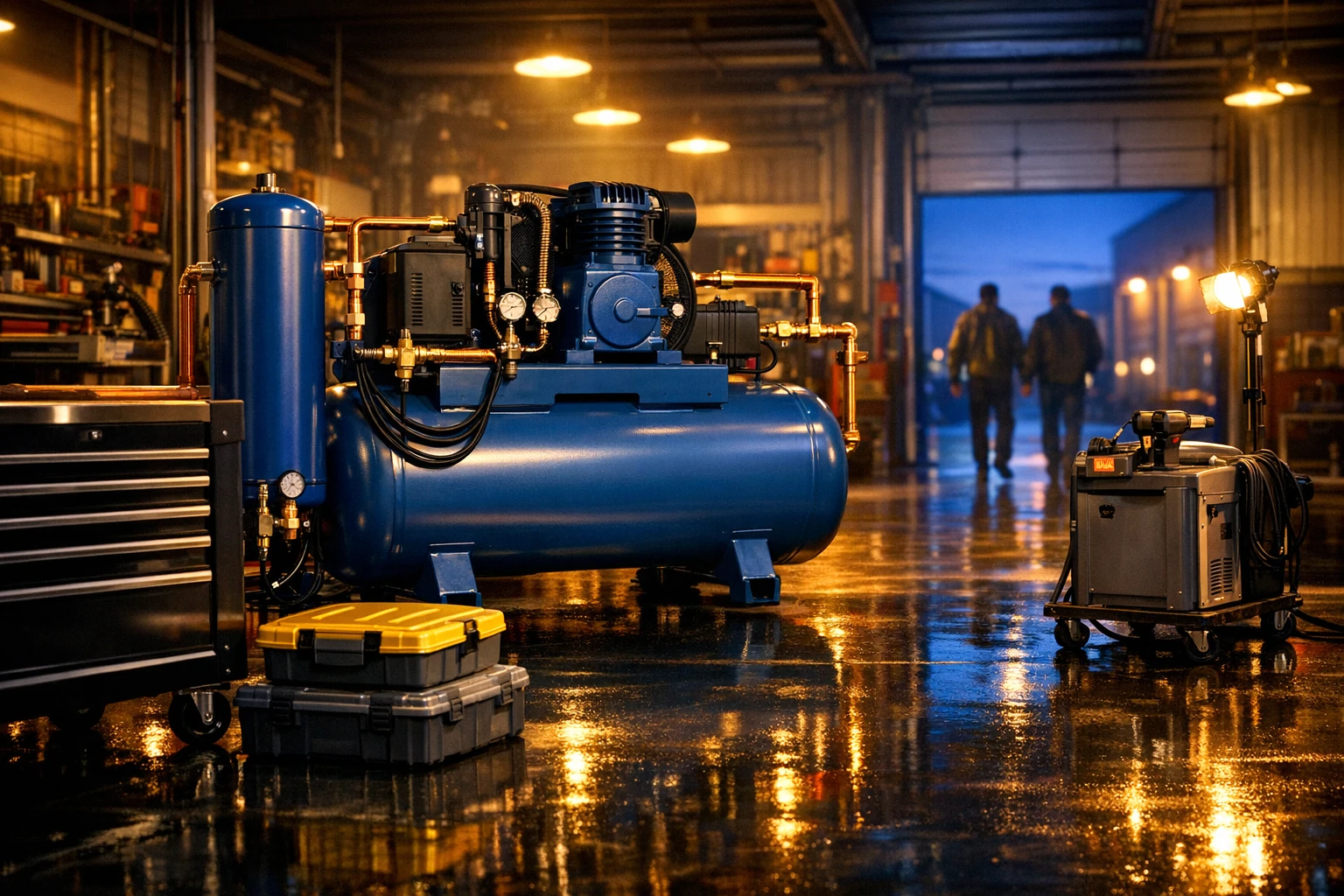
A Practical Guide to Buying Used Industrial Tools
Buying used industrial tools is often less about chasing a bargain and more about adding real production capacity without straining cash flow. Fabricators, maintenance crews, contractors, and smaller manufacturers regularly turn to pre-owned equipment when they need reliability, speed, and practical value. A well-chosen compressor, press, welder, or lathe can keep work moving for years, provided the buyer understands condition, compatibility, safety, and total ownership cost before signing the deal.
Outline: This article first explains why the used market matters, then looks at inspection methods, compares the main buying channels, breaks down total cost and negotiation strategy, and closes with a practical summary for owners, purchasing teams, and shop managers who want dependable equipment rather than expensive surprises.
1. Why Used Industrial Tools Matter in Modern Operations
The market for used industrial tools exists for a simple reason: many industrial assets are built to work hard for a long time. Unlike low-cost consumer tools, professional-grade equipment is often designed with serviceability, rebuild potential, and replaceable components in mind. That changes the buying equation. A used air compressor, drill press, milling machine, generator, torque tool, or welding unit may have years of useful life left, especially if it came from a plant with documented maintenance practices. For many buyers, the appeal is not only price. It is speed, availability, and access to better specifications than a new budget model could offer.
Depreciation is one of the strongest arguments in favor of buying used. New industrial equipment often loses value quickly in its early years, even when the machine remains fully functional. That means a buyer in the secondary market can sometimes obtain a premium brand or heavier-duty model for far less than its original cost. In practical terms, a small machine shop might choose a used industrial lathe from a respected manufacturer instead of a lightly built entry-level new unit. The used machine may offer a sturdier frame, better rigidity, and longer-term repair support through aftermarket parts suppliers.
Used tools are also relevant because production needs change faster than capital budgets. A contractor may need a second hydraulic pump for a temporary expansion. A maintenance team might need backup electric torque equipment to avoid shutdown delays. A growing manufacturer may want to add one more weld station before committing to a larger facility upgrade. In such cases, the used market provides flexibility.
Common reasons businesses choose used industrial tools include:
- Lower upfront cost and less pressure on cash reserves
- Faster acquisition when lead times for new equipment are long
- Access to durable legacy models with proven field performance
- Reduced environmental impact through reuse and longer asset life
- Opportunity to standardize around a brand already in use
There is also a sustainability angle that deserves attention. Extending the life of industrial tools reduces waste, limits the demand for new raw materials, and supports a more circular approach to manufacturing and maintenance. That does not automatically make every used purchase wise, but it does mean the market has practical and environmental relevance. Think of it this way: a good used tool is not yesterday’s leftover. It is often a working asset waiting for its next shift.
Still, used is not always better. Buyers must compare the risks of wear, obsolete controls, missing guards, and uncertain service history against the benefits of lower cost. The smartest approach is not emotional bargain hunting. It is disciplined comparison between price, condition, and expected output.
2. How to Inspect Condition, Safety, and Remaining Service Life
A used industrial tool can look solid on the surface while hiding expensive problems underneath. Paint can be refreshed, housings can be cleaned, and a seller can speak confidently, but the machine itself usually tells the real story. Inspection is where good buying decisions are made. A buyer should examine the tool from three angles at the same time: physical condition, functional performance, and supportability. If one of those areas fails, the price must reflect the risk or the deal should be left behind.
Start with the basics. Confirm the model number, serial number, manufacturer plate, voltage requirements, capacity rating, and safety labels. Check whether guards, emergency stops, shields, covers, and interlocks are present. Missing safety components are not minor details. They affect compliance, worker protection, and commissioning cost. Then move to wear patterns. On rotating tools and machines, inspect bearings, shafts, couplings, belts, pulleys, and signs of vibration. On hydraulic or pneumatic systems, look for leaks, hose condition, pressure stability, and evidence of contamination. On welding or electrical equipment, inspect cables, insulation, connectors, duty cycle ratings, fan operation, and heat damage.
Service records matter because they turn guesses into informed judgment. A machine with logbooks, preventive maintenance notes, calibration history, and known repairs is usually a safer bet than one with a vague backstory. Hours of use are also helpful, but they should not be read in isolation. A lightly used machine stored poorly can be worse than a high-hour machine serviced consistently. Industrial tools age from neglect as much as from operation.
During inspection, a buyer should verify:
- Whether the tool starts, runs, and stops as expected
- Whether noise, heat, vibration, or odor suggests hidden faults
- Whether controls, displays, switches, and indicators work correctly
- Whether wear parts are standard, available, and reasonably priced
- Whether manuals, wiring diagrams, and tooling are included
Comparisons are useful here. A used hand-held industrial drill may require a simpler evaluation focused on motor health, chuck wear, housing damage, and cord condition. A used CNC machine demands a deeper review of backlash, spindle condition, software compatibility, control age, lubrication systems, and replacement electronics. The more complex the asset, the more important it becomes to involve a technician, operator, or independent inspector.
If possible, see the tool under load. A compressor should build and hold pressure. A press should complete a cycle smoothly. A welder should arc consistently. A lathe should cut cleanly without chatter beyond what the setup would normally cause. In that moment, the machine stops being a listing and becomes evidence. Good inspection does not eliminate uncertainty, but it shrinks the zone where expensive mistakes like to hide.
3. Where to Buy Used Industrial Tools and How to Evaluate Sellers
Where you buy a used industrial tool often matters as much as what you buy. Two identical machines can carry very different risk depending on the source, the seller’s transparency, and the level of support offered after the sale. Buyers usually encounter five common channels: equipment dealers, auctions, direct sales from operating plants, rental fleet disposals, and online marketplaces. Each has strengths, weaknesses, and a distinct rhythm.
Used equipment dealers are often the easiest place to start, especially for buyers who want some level of screening before purchase. Reputable dealers may clean, inspect, test, or lightly refurbish equipment. They may also provide loading assistance, limited return terms, or short warranties on selected items. Prices can be higher than private listings, but that premium may buy better documentation and less uncertainty. For a first-time buyer, that trade-off is often sensible.
Auctions can offer strong value, but they demand discipline. The excitement of bidding has a strange ability to erase spreadsheets. Buyers may find excellent assets from plant closures or surplus events, yet auction terms are frequently strict, with limited guarantees and short removal windows. Freight, rigging, and buyer’s premiums can lift the total cost quickly. A tool that looked like a deal at first glance can become average-priced once fees are included.
Direct purchases from factories, contractors, or maintenance departments can be excellent when the seller knows the history of the equipment. You may learn why the tool is being sold, how heavily it was used, and whether major repairs were completed. Rental fleet disposals are another interesting channel. Rental tools often show cosmetic wear, but fleet operators may maintain them systematically because uptime is central to their business model.
When comparing sources, consider the following:
- Dealer: higher price, but often better screening and documentation
- Auction: broad selection and possible value, but more risk and added fees
- Direct seller: better history if transparent, though support may be limited
- Rental fleet: visible wear, yet maintenance may be stronger than expected
- Online marketplace: convenient reach, but verification work falls on the buyer
Seller evaluation should be structured, not casual. Ask clear questions: How long has the seller owned the tool? Why is it being sold? Can it be demonstrated under power? Are maintenance records available? Has any major component been replaced? What accessories, manuals, fixtures, or spare parts are included? If the seller avoids direct answers, provides mismatched photos, or resists inspection, that hesitation is information in itself.
Trust is useful, but evidence is better. Look for complete photos, legible nameplates, documented dimensions, operating videos, and consistency between the listing and the actual machine. In the used market, credibility is built in small details. Sellers who provide them usually understand what serious buyers need.
4. Pricing, Total Cost of Ownership, and Negotiation Strategy
The asking price of a used industrial tool is only the opening number, not the final cost. Many buyers make their biggest mistake here: they compare a used machine to a new one based only on purchase price and ignore everything that happens after delivery. Total cost of ownership is the better framework. It captures transportation, installation, tooling, maintenance, downtime risk, compliance updates, calibration, and operator training. Sometimes a seemingly cheap machine becomes expensive very quickly. Sometimes a slightly higher-priced unit with documentation, accessories, and better condition becomes the better financial decision.
A practical cost review should include the following questions. What will it cost to move the tool? Does it require rigging, special loading, or crating? Will the buyer need new electrical service, compressed air capacity, extraction, cooling, or foundations? Are critical consumables still available? Will the machine need replacement guards, seals, filters, hoses, bearings, or software support before it can enter service? Even smaller tools can generate hidden costs when they require new batteries, chargers, attachments, collets, fixtures, or certification.
For comparison, consider two used welding systems. One is cheaper but comes without leads, regulator, cart, or verification of output accuracy. The other costs more but includes accessories, recent service records, and a live demonstration. On paper, the first unit looks attractive. In reality, the second may return to work faster and with lower risk. Time matters. A tool that sits idle while parts are sourced is not really saving money.
When building a buying estimate, list costs in categories:
- Purchase price and transaction fees
- Freight, insurance, rigging, and unloading
- Repairs, refurbishment, and missing components
- Tooling, consumables, software, or calibration
- Downtime risk and labor required for setup
Negotiation works best when it is grounded in facts rather than dramatic bargaining. Point to observable issues: missing guards, worn hoses, incomplete tooling, uncertain service history, obsolete controls, or the need for immediate replacement parts. Sellers respond more seriously to specific findings than vague statements such as “the price feels high.” If possible, bring comparable listings, lead-time realities for new equipment, and a clear pickup timeline. A prepared buyer is easier to take seriously.
It is also wise to define a walk-away number before discussions begin. That limit protects the buyer from urgency, optimism, and the common belief that one more compromise will somehow fix a poor fit. Used industrial tools create value when they align with your process, your maintenance capacity, and your production goals. If the numbers stop making sense, the smartest negotiation move is often a polite exit.
5. Conclusion: Turning a Used Tool Purchase into a Reliable Asset
For shop owners, plant supervisors, maintenance teams, and contractors, the real goal is not simply to buy used industrial tools. The goal is to buy capability with controlled risk. That difference matters. A used tool becomes an asset only when it can be installed, operated safely, maintained without drama, and relied upon when work arrives. The purchase decision, therefore, should be viewed as a process rather than a transaction.
The strongest buyers tend to follow a repeatable sequence. First, they define the job clearly: required capacity, power needs, duty cycle, footprint, accuracy, and compatibility with existing systems. Second, they identify acceptable brands or models based on parts availability and service support. Third, they inspect condition carefully and verify documentation. Fourth, they calculate the complete cost to commission the tool, not just the amount on the invoice. Finally, they build a plan for the first months of ownership, including preventive maintenance, operator familiarization, spare parts, and safety checks. This simple structure separates practical investment from impulsive shopping.
It also helps to match the tool to the organization’s maturity. A large manufacturer with in-house electricians and machinists may comfortably purchase older, more complex equipment and rebuild it economically. A small contractor with limited technical support may be better served by simpler used tools with standard parts and straightforward controls. There is no universal best choice. The right fit depends on who will operate the tool, who will maintain it, and how costly failure would be during normal operations.
Before putting a purchased tool into service, complete a short post-purchase checklist:
- Document model, serial number, manuals, and spare parts sources
- Inspect safety features again after transport and installation
- Replace wear items that create easy avoidable failures
- Train operators on controls, limits, and shutdown procedures
- Schedule preventive maintenance from day one rather than after a problem
If there is one idea worth carrying forward, it is this: used industrial tools reward patience. The best deals rarely shout. They usually appear in well-documented listings, careful inspections, realistic pricing, and buyers who know exactly what problem they are trying to solve. For businesses that want to stretch budgets without lowering standards, the used market can be a remarkably practical place to buy. Enter it with questions, measurements, and a calm eye, and you are far more likely to leave with a machine that earns its keep.