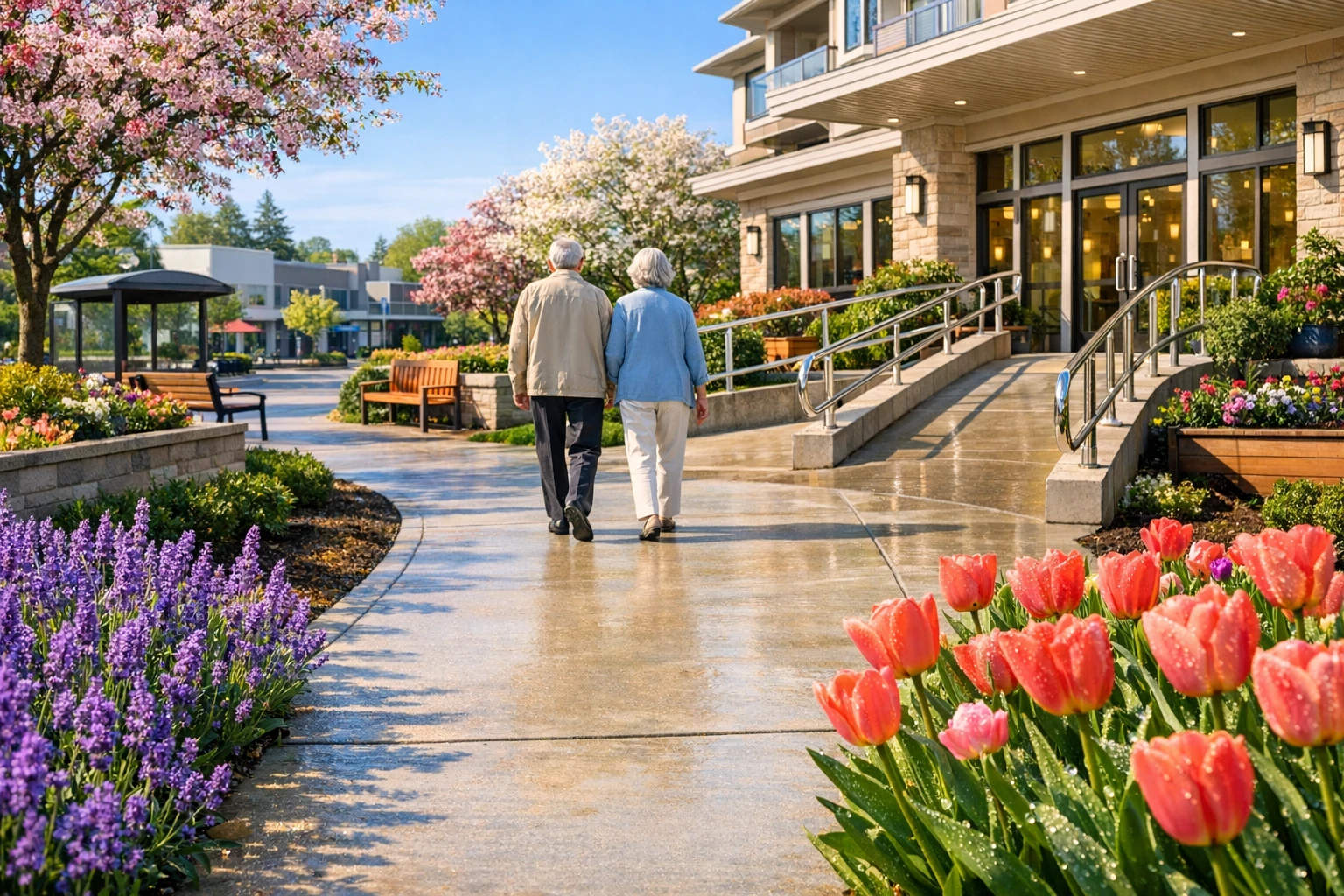
Navigating Social Housing Options for Seniors Over 60: A Complete Guide
Choosing a home later in life is about far more than rent; it shapes comfort, independence, safety, and the rhythm of everyday living. For adults over 60, social housing can open doors to stable costs and better support, yet the route in is often filled with forms, waiting lists, and unfamiliar terms. This guide breaks the process into clear steps so seniors and families can compare options, avoid common mistakes, and make decisions that fit real needs.
Article Outline
This guide is organized to move from the big picture to the practical details. It begins by explaining what social housing means for seniors and why demand continues to rise. It then looks at eligibility rules, documents, and waiting lists, before comparing major housing models such as independent senior units, sheltered housing, and supportive communities. The final parts focus on cost, rights, and a step-by-step approach to choosing wisely.
- Understanding the social housing landscape for people over 60
- Checking eligibility and preparing a strong application
- Comparing the main types of senior social housing
- Reviewing costs, contracts, accessibility, and daily life factors
- Creating an action plan and making a confident final choice
1. Understanding Social Housing for Seniors Over 60
Social housing is a broad term, but for seniors it usually refers to homes offered below or closer to affordable market levels by public bodies, housing associations, non-profit organizations, cooperatives, or regulated community providers. The purpose is simple: to give people a stable place to live when private rents or purchase prices have become too hard to manage. Yet the lived reality is more layered. One senior may need only a smaller, affordable apartment near a bus route. Another may need step-free access, on-site support staff, or a community where isolation is less likely to creep in with the evening quiet.
The relevance of this topic is growing. According to the United Nations, by 2030 one in six people in the world will be aged 60 or older. At the same time, many older adults live on fixed or reduced incomes, often shaped by pensions, savings, or part-time work rather than full earnings. When rent, utilities, food, and healthcare all climb at once, housing becomes the pressure point. Social housing can help relieve that pressure, but only if applicants understand what is actually available in their area.
It is also important to know that social housing is not a single product. In many regions, older adults may encounter several models:
- Age-restricted apartments designed for independent living
- Sheltered or supported housing with staff presence or emergency call systems
- Public or council housing with senior priority categories
- Non-profit communities that combine affordable rent with social programs
- Accessible units adapted for mobility needs
That variety matters because affordability alone does not tell the whole story. A low-rent apartment on the fourth floor without a lift may be cheaper than a private rental, but it may not be practical for someone with arthritis or balance issues. A unit near shops, clinics, and family can make daily life smoother than a cheaper unit placed far from transport. In other words, the right social housing option is rarely the one with the lowest headline price; it is the one that supports the kind of life a person can realistically and comfortably maintain.
There is also an emotional side to the decision that deserves respect. Moving after 60 can feel like closing one chapter while trying to write the next in smaller handwriting. Social housing is not only about need; it is also about preserving choice, routine, and dignity. That is why understanding the landscape early, before a crisis forces a rushed decision, gives seniors a stronger position. The more clearly a person understands the local system, the easier it becomes to ask useful questions, compare offers, and recognize which option is truly suitable.
2. Eligibility, Waiting Lists, and How the Application Process Usually Works
One of the first surprises many applicants face is that there is no universal rulebook. Eligibility for social housing varies by country, city, and provider, but common themes appear again and again. Most programs consider age, income, current housing circumstances, local connection, and level of need. For seniors over 60, age may open the door to designated housing, but age alone rarely guarantees placement. Providers often weigh several factors together, especially when demand is high and vacancies are limited.
Typical eligibility checks may include:
- Minimum age, often 55, 60, or 62 depending on the scheme
- Income thresholds or proof that market housing is unaffordable
- Residency rules, such as living or working in the area for a set period
- Citizenship, visa, or legal residence requirements where applicable
- Medical or mobility needs that affect current living conditions
- Household size, including whether the applicant lives alone or with a spouse
Applications usually require paperwork, and missing documents can slow the process more than many people expect. A careful application file often includes identification, proof of age, pension or income statements, bank details, rent statements, medical letters if relevant, and sometimes references. It helps to make copies and keep a dated checklist. For many seniors, this stage feels like trying to build a bridge out of envelopes and forms, but organization really does pay off.
Waiting lists are another major part of the picture. In high-demand areas, the wait can range from several months to several years. Priority systems are common, and they may place applicants into bands or points-based categories. Someone living in unsafe housing, dealing with severe accessibility barriers, or facing homelessness may move ahead of someone whose current home is stable but expensive. That can feel frustrating, but it reflects how most public systems allocate scarce homes.
There are practical ways to improve the experience without making unrealistic assumptions. Seniors and families can:
- Apply to more than one eligible provider if local rules allow
- Update the application when health, mobility, or financial circumstances change
- Respond quickly to letters, emails, or phone calls from housing offices
- Ask whether there are specialist senior units, mobility-adapted homes, or rural options with shorter waits
- Seek help from social workers, local charities, or advocacy groups when forms are difficult
It is also wise to ask how offers are made. Some systems allow applicants to bid on available homes, while others match people directly. Some providers conduct interviews or home assessments. Others may require attendance at orientation meetings. Understanding these steps early helps avoid missed opportunities.
The most useful mindset is to treat the application like an ongoing process rather than a one-time event. A well-prepared applicant checks status regularly, keeps documents current, and asks polite but direct questions. In a system shaped by limited supply, persistence and clarity are not minor virtues; they are practical tools.
3. Comparing the Main Social Housing Options for Older Adults
Once eligibility is clear, the next challenge is comparison. Seniors over 60 often discover that social housing includes more than one path, and each path offers a different balance of privacy, support, community, and long-term suitability. Looking at the options side by side can prevent a decision that feels affordable on paper but difficult in real life.
The most familiar option is independent senior housing. These are usually self-contained apartments or small homes reserved for older residents. They may offer lower rent, accessible design features, lift access, and a calmer environment than general housing. This type suits people who manage daily life independently and want affordability without extensive on-site care. The advantage is autonomy. The trade-off is that support may be limited to maintenance and emergency contact arrangements rather than regular personal assistance.
Sheltered housing, sometimes called supported senior housing, usually adds shared facilities and a greater sense of watchful presence. Residents still have their own units, but there may be a scheme manager, alarm systems, communal lounges, or organized activities. This works well for older adults who do not need full-time care but value reassurance and social connection. For someone recently widowed or living alone, that built-in network can matter as much as the rent level. However, service charges may be higher, and some communities have rules about guests, pets, or noise that deserve close reading.
Extra-care or supportive housing sits further along the support spectrum. It often blends independent living with access to personal care services, meal support, or staff assistance. This can be an excellent middle ground for seniors whose needs are increasing but who do not want, or do not yet need, residential care. The biggest benefit is flexibility: a person may remain in familiar surroundings while support grows over time. The limitation is availability. These units are often in short supply, and eligibility can be stricter.
Other models also deserve attention:
- Cooperative or community-led housing, where residents have a stronger voice in management
- Intergenerational social housing, which mixes age groups and may reduce social isolation
- Shared housing schemes, which lower cost but require comfort with less privacy
- Accessible mainstream public housing, which may work if senior-specific units are unavailable
When comparing options, ask practical questions rather than abstract ones. Is there step-free entry? How far is the nearest grocery store or clinic? Are utility costs included? What social activities exist, and are they optional? Can the property be adapted if mobility changes? What happens if a spouse later needs to move in, or if one partner dies?
A useful comparison framework is to rate each option across five areas: affordability, accessibility, support, location, and future fit. A home that scores well in only one category may not be the best choice. The strongest option is often the one that quietly supports ordinary life: reaching the kettle safely, seeing a neighbor in the hallway, catching the bus without strain, and sleeping at night without worrying about next month’s rent.
4. Costs, Contracts, Accessibility, and Everyday Factors That Matter More Than People Expect
Affordability is a central reason seniors explore social housing, but the real cost of a home is never just the advertised rent. A unit can look manageable until service charges, utility bills, transport expenses, and adaptation needs start gathering around it like uninvited guests. That is why a proper comparison should include both visible and hidden costs.
In many social housing systems, rent is set below typical market levels or linked in some way to income. The exact formula varies, so applicants should ask whether rent is fixed, income-based, or reviewed annually. It is also important to check what is included. Some properties cover maintenance of shared spaces, emergency alarm services, or heating components, while others do not. A slightly higher rent may actually be better value if it includes features that reduce other monthly bills.
Key cost questions include:
- Are utilities included, partly included, or fully separate?
- Is there a service charge for lifts, gardens, cleaning, alarms, or communal areas?
- Will the tenant need to pay for repairs, decorating, or flooring?
- Are there moving costs, deposit requirements, or furniture needs?
- What transport costs will arise if shops and clinics are farther away?
Contracts deserve equal attention. Some homes come with secure or long-term tenancies, while others may use license agreements or different occupancy terms. Seniors should ask what protections apply, how rent increases are handled, and what happens if health needs change. It is also useful to clarify visitor rules, succession rights for a spouse or partner, subletting restrictions, and policies on pets. These details may seem secondary during the excitement of receiving an offer, but they shape day-to-day comfort and long-term security.
Accessibility is another major factor. A home that is technically affordable but physically difficult can become costly in other ways, whether through taxi dependence, fall risk, or the need for later relocation. Features worth checking include:
- Step-free access at the entrance and inside the unit
- Lift reliability if the apartment is above ground level
- Bathroom design, including grab rails or walk-in showers
- Door widths for walkers or wheelchairs
- Lighting, flooring, and safe storage layout
Then come the everyday realities that brochures rarely capture. Is the neighborhood noisy after dark? Are benches available on the walk to the bus stop? Does the building feel welcoming or anonymous? Are there nearby friends, family, faith groups, or community centers? Loneliness, convenience, and confidence are not decorative concerns; they are practical ones.
The best approach is to visit, if possible, at more than one time of day and bring a written checklist. A relative, friend, or advocate may notice issues the applicant misses. Good housing decisions are rarely glamorous. More often, they come from patient observation, simple questions, and the wisdom to imagine not just moving in, but living there well for years.
5. Choosing with Confidence: A Practical Path Forward for Seniors and Families
After researching options, gathering documents, and comparing offers, the final stage is decision-making. This is where many seniors feel a mix of relief and uncertainty. A suitable home may be available, yet the choice can still feel weighty because it touches every part of life: routine, money, family visits, health, and peace of mind. The goal is not to find a mythical perfect property. The goal is to choose a home that is safe, affordable, workable, and kind to the future.
A practical decision process often helps more than endless deliberation. Start by naming the non-negotiables. For one person, that may be step-free access and proximity to a medical clinic. For another, it may be staying near grandchildren or within reach of a familiar neighborhood. Once the essentials are clear, separate them from preferences. A lovely garden view is nice; a lift that works every day is essential. This distinction prevents emotionally appealing but unsuitable choices.
Before accepting a home, seniors and families should ask a final set of grounded questions:
- Can I manage daily life here without strain?
- Will this remain suitable if my mobility or income changes?
- Do I understand the tenancy terms and total monthly costs?
- Is the area connected to transport, shopping, and support networks?
- Do I feel secure here, not just on paper but in instinctive, everyday terms?
It is also wise to guard against confusion and pressure. Applicants should work directly with recognized housing providers, local authorities, or established non-profit organizations, and be cautious about anyone asking for unofficial fees or making promises that sound unusually fast or guaranteed. A legitimate process may be slow, but it should still be transparent.
For families and caregivers, support works best when it strengthens the senior’s voice instead of replacing it. Help with forms, viewings, and comparisons is valuable, but the person who will live in the home should remain central to the decision whenever possible. Independence in later life does not always mean doing everything alone; often it means having the right support while keeping meaningful control.
In summary, social housing can offer stability, affordability, and community for people over 60, but successful choices depend on preparation. Learn the local system, apply early, keep records organized, compare more than price, and think ahead about accessibility and support. If you are a senior reading this, take heart: the process may be detailed, but it is navigable. If you are helping a parent, partner, or friend, patience and clear questions can make the path far less intimidating. A good home in later life is not merely a roof. It is a foundation for calmer days, safer routines, and a future that still feels like your own.