7-Night Cruise from Southampton to Iceland: Itinerary, Highlights, and Planning Tips
Why a 7-Night Southampton to Iceland Cruise Is Worth Considering
Few voyages change mood as visibly as the run from Southampton to Iceland: one day you leave familiar English shores, and within a week you are looking at black lava, steaming ground, and harbors edged by mountains. The route matters because it replaces the stop-start feel of airport travel with a gradual passage north. It suits travelers who want structure without dragging luggage between hotels. Understanding how these cruises are usually paced helps you spend money, energy, and shore time far more wisely.
A 7-night Iceland cruise from Southampton has a very specific appeal. For UK travelers, the biggest advantage is simplicity. You begin in one of Britain’s main cruise ports, avoid a flight at the start of the holiday, and ease into the trip over sea days that act almost like a transition zone between ordinary life and something more remote. That slow change is part of the experience. The water darkens, the air cools, and by the time Iceland appears, it feels earned rather than merely reached.
These sailings are also relevant because they sit neatly between two common travel styles. On one side is the fly-and-stay city break in Reykjavik, which is efficient but limited in geographic reach unless you rent a car or join long day tours. On the other side is the classic Iceland road trip, which offers freedom but demands more planning, more packing, and often a larger budget once hotels, meals, car hire, and fuel are counted. A cruise can reduce that logistical load while still giving you a broad introduction to the country’s coastal regions.
This article follows a practical outline so readers can plan with realistic expectations:
• what a typical 7-night route can include
• how ports such as Reykjavik, Isafjordur, Akureyri, Heimaey, or Seydisfjordur compare
• which natural and cultural highlights are most memorable
• how to choose cabins, excursions, clothing, and timing
• who this kind of cruise suits best, and who may prefer a land-based trip instead
One important point sets expectations correctly: not every 7-night cruise follows the same pattern. Some are one-way sailings that begin in Southampton and finish in Iceland. Others are segments within longer Nordic itineraries. Weather and sea conditions can also affect port calls more than on warmer, more sheltered routes. That does not make the trip less appealing; it makes flexibility part of the adventure. Think of this cruise less as a checklist holiday and more as a carefully framed introduction to the North Atlantic, where the journey and the destination are equally important.
Typical 7-Night Itinerary: What the Route Usually Looks Like
A realistic 7-night cruise from Southampton to Iceland is usually designed as a one-way or repositioning-style journey rather than a full round trip. That matters because the geography is no small detail. Iceland sits far enough north-west of southern England that ships need a substantial amount of sailing time, typically spread over at least two sea days before the first Icelandic call. For travelers, that means the itinerary feels less like a fast port-hopping loop and more like a steady transition from British coastline to open Atlantic, then into Iceland’s sharper, more dramatic scenery.
A common outline looks something like this:
• Day 1: Depart Southampton
• Day 2: Sea day in the North Atlantic
• Day 3: Sea day, often with lectures, route briefings, or wildlife spotting
• Day 4: First Icelandic port, often Heimaey or Seydisfjordur depending on route
• Day 5: Reykjavik
• Day 6: A western or northern stop such as Isafjordur
• Day 7: Another Icelandic call, often Akureyri or scenic cruising
• Day 8: Final arrival or disembarkation in Iceland, most commonly Reykjavik on some variations
The exact order varies widely. Some cruises head first to Heimaey in the Vestmannaeyjar islands, which offers an excellent introduction to Iceland’s volcanic character. Others approach the east coast and call at Seydisfjordur, a small, photogenic town set at the end of a narrow fjord. The difference is more than cosmetic. Heimaey gives you early access to volcanic history, sea cliffs, and birdlife, while Seydisfjordur delivers a stronger first impression of Icelandic fjord scenery and small-town calm.
Reykjavik is often the anchor port because it combines culture, transport links, and excursion range. From there, cruise guests may visit geothermal sites, museums, or nearby landmarks depending on time in port. Isafjordur, when included, adds a more remote Westfjords feeling, with steeper landscapes and a stronger sense of geographic isolation. Akureyri, farther north, can be a gateway to waterfalls, volcanic areas, and whale-watching country.
The biggest planning lesson is simple: read the itinerary with an eye for port duration, not only port names. A day in Reykjavik that runs from morning to late evening is very different from a short scenic stop elsewhere. Also remember that Icelandic weather can alter operations. If the captain substitutes or reshuffles a call, that is not unusual for this region. In practical terms, the best cruisers for this route are the ones who enjoy the structure of a plan but are not rattled when the North Atlantic decides to add its own edits.
Highlights of the Voyage: Ports, Landscapes, Wildlife, and the Onboard Experience
The highlights of this cruise begin before Iceland appears. Sea days on a northern route are not empty filler unless you want them to be. They create atmosphere. On deck, the breeze grows cleaner and colder, and the sea can shift from silver-blue to a heavy metallic grey that looks almost brushed by hand. If your ship offers destination talks, geology lectures, or naturalist commentary, attend them. Iceland becomes much more rewarding when you understand why its coastlines look torn open, why geothermal heat shapes towns and bathing culture, and why the weather changes so quickly. Even simple pleasures matter here: a warm drink by a panoramic window, a good map, and the first cry of seabirds circling the ship can make the approach feel cinematic.
Among ports, Reykjavik is usually the most versatile. It is compact enough for independent exploring, but it also supports a wide range of excursions. Travelers interested in culture may prefer Hallgrimskirkja, Harpa, or the National Museum, while others use the city as a launch point for geothermal lagoons, lava landscapes, or the classic Golden Circle region if time allows. Reykjavik feels contemporary and creative, which makes it a useful counterpoint to the raw scenery elsewhere on the route.
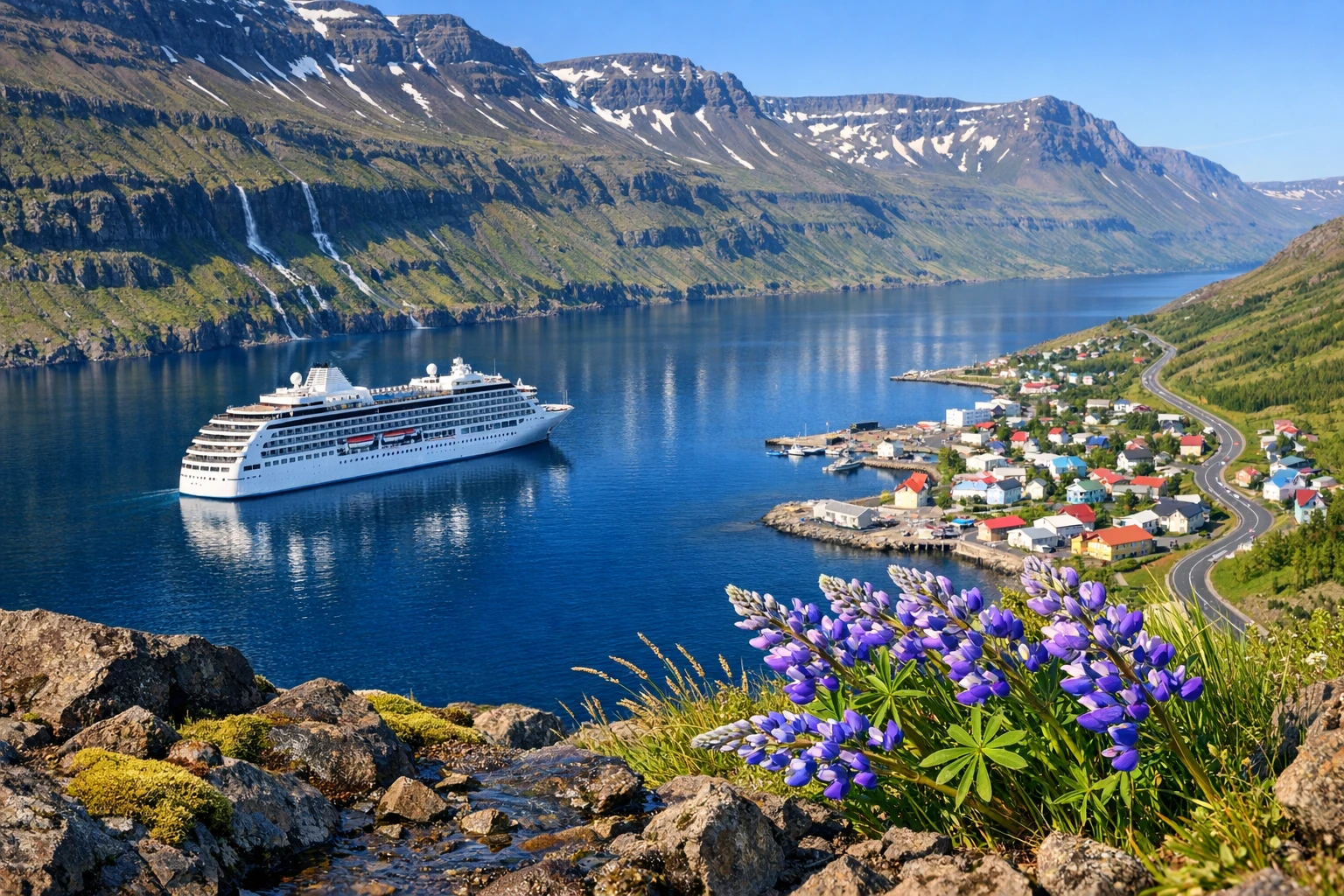
Isafjordur offers a different rhythm. It is quieter, steeper, and more immediately dramatic. The Westfjords do not try to entertain you in obvious ways; they impress through scale and isolation. Small settlements, folded mountains, and roads that seem lightly placed on the landscape give this area a frontier quality. Akureyri, by contrast, often feels more balanced between nature access and town comfort. It is one of the best places on a short cruise to appreciate northern Iceland without feeling completely removed from services and infrastructure.
Heimaey, when included, is especially memorable because of its volcanic story. The 1973 eruption reshaped daily life on the island and remains central to its identity. Seydisfjordur, when included instead, is gentler in mood, known for its fjord setting, colourful houses, and artistic feel. Both are strong ports, but they offer different emotions: Heimaey feels dramatic and elemental, while Seydisfjordur feels remote and reflective.
Then there is wildlife. Depending on season and luck, passengers may see seabirds, puffins in some areas, and whales on selected excursions. Summer brings extended daylight, which lengthens the sense of possibility. Even when the weather turns moody, that mood becomes part of the charm. Iceland is not a destination that needs perfect sunshine to work. Mist on a hillside, low cloud over a harbor, and the brief opening of light across the water can be more moving than a postcard-blue sky. For many travelers, that mix of comfort on board and stark beauty ashore is the real highlight of the trip.
Planning Tips: Booking, Budget, Cabins, Packing, and Excursions
Planning well is especially important on a 7-night Iceland cruise because the trip is short enough to feel efficient but too short to recover easily from poor choices. The first decision is understanding whether your sailing is one-way or round trip. Many Southampton-to-Iceland itineraries are one-way or part of a larger seasonal repositioning pattern, which means you may need to book a return flight from Iceland or extend your stay ashore. That can be a major advantage if you want extra time in Reykjavik, but it must be budgeted from the start rather than treated as an afterthought.
Cabin choice matters more on this route than on some warmer itineraries. An inside cabin can be good value, especially if you plan to spend most of your day on deck or in lounges. An ocean-view cabin gives you natural light, which can make sea days feel more connected to the journey. A balcony, if priced sensibly, is often tempting for scenic arrivals and long evening light, though cold wind means you may use it differently than on a Mediterranean cruise. In simple terms:
• inside cabins save money
• ocean-view cabins improve the sense of place
• balcony cabins can be wonderful for scenery, but only if the extra cost fits your budget comfortably
Packing should be based on layers, not on the calendar month alone. Even in summer, conditions can shift quickly between cool sunshine, drizzle, and wind. A practical packing list usually includes:
• a waterproof outer layer
• a warm mid-layer such as fleece or light wool
• comfortable walking shoes with grip
• hat and light gloves for deck time
• a small day bag for shore excursions
• motion-sickness remedies if you are sensitive to rougher water
Budgeting also deserves realistic thought. Cruise fares can vary from the high hundreds into several thousand pounds or more per person depending on line, cabin, season, and inclusions. The base fare is only part of the picture. Add gratuities if not included, drinks, specialty dining, Wi-Fi, and especially excursions. In Iceland, shore tours can be expensive because transport distances are long, labor costs are high, and activities often involve specialist guides or smaller group sizes. A scenic coach tour may be manageable, while premium experiences such as whale watching, super-jeep outings, or spa visits can raise the total quickly.
Finally, plan for flexibility. Book must-do excursions early if spaces are limited, but leave some room for independent exploring where practical. Check current passport, entry, and travel insurance requirements well before departure. If you are prone to seasickness, choose a midship cabin on a lower deck if possible and start preventive remedies before the water gets lively. Most importantly, do not over-schedule every port. Iceland rewards travelers who leave a little space for weather, wonder, and the simple pleasure of standing outside as a fjord opens around the ship.
Conclusion: Who This Cruise Suits Best and How to Make the Most of It
A 7-night cruise from Southampton to Iceland is best suited to travelers who value ease, scenery, and a clear sense of progression. If you like the idea of leaving from the UK without beginning the holiday in an airport queue, this route has obvious appeal. If you enjoy waking up in a new landscape without repacking every day, it becomes even more attractive. And if Iceland has been on your list but you are not ready to commit to a longer land circuit or an expensive self-drive holiday, this kind of sailing can work as a strong first introduction.
It is especially well matched to several types of travelers. First-time visitors to Iceland often benefit from seeing multiple coastal regions before deciding whether they want to return for a deeper inland trip. Couples tend to enjoy the balance between dramatic scenery and comfortable evenings on board. Solo travelers may appreciate the built-in structure of cruising, particularly on a route where weather and logistics can be more complicated on independent trips. Photographers, wildlife enthusiasts, and anyone drawn to cooler climates usually find this itinerary more rewarding than a standard sun-focused cruise.
That said, it is not ideal for everyone. Travelers who want long beach days, guaranteed heat, or maximum nightlife in every port may find the route too weather-dependent and too quiet in places. Likewise, people who want to explore Iceland in great depth, hike extensively inland, or spend several days in remote regions may be better served by a dedicated land itinerary. A cruise offers breadth, atmosphere, and convenience; it does not replace the freedom of having your own wheels in Iceland.
To get the most from the trip, approach it with the right mindset. Read the itinerary carefully, budget for the excursions that matter most, dress for changeable conditions, and accept that weather may rewrite small parts of the script. If you do that, the rewards can be considerable. The route offers a rare mix of accessibility and genuine northern drama. You start from a familiar English port and end up among volcanic islands, deep fjords, and luminous evenings that barely seem to close. For travelers who want a manageable adventure with a real sense of distance and discovery, this cruise is a compelling choice.