2-Night Cruise from Plymouth to St Malo: Route Overview, Itinerary Ideas, and Practical Tips
A 2-night cruise from Plymouth to St Malo turns a simple crossing into a compact travel experience, giving UK travellers a practical way to sample northern France without committing to a full week away. It works well for couples, friends, and solo visitors who want sea travel, walkable history, and a fresh change of pace in one booking. Because the time ashore is limited, careful planning matters. Understand the route, the port routine, and the smartest ways to shape your day, and the trip can feel far richer than its short duration suggests.
Outline: What This Mini Cruise Includes and Why It Matters
Before getting into details, it helps to understand what people usually mean by a 2-night cruise from Plymouth to St Malo. In most cases, this is a short break built around two overnight sailings: one from Plymouth to Brittany, followed by a return crossing after a day or part of a day in St Malo. That structure is exactly why the route has lasting appeal. It compresses transport, accommodation, and sightseeing into a format that feels efficient without becoming rushed beyond reason.
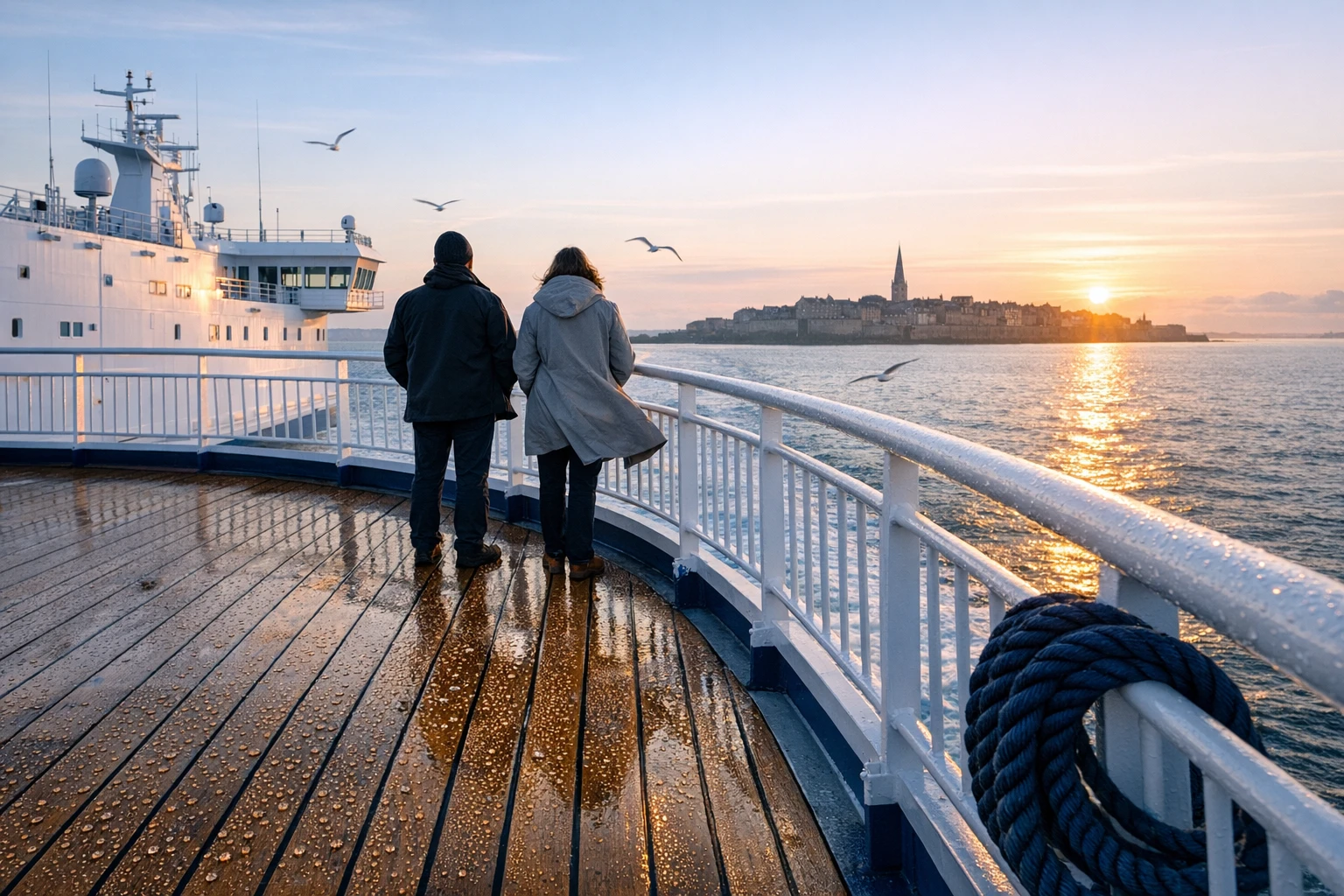
This type of trip matters because it sits between two travel styles. It is more immersive than a day trip and less demanding than a week-long holiday. You are not just arriving somewhere; you are feeling the transition. When the ship eases away from Devon and the harbour lights begin to shrink, the break has already started. That sense of movement is something flying rarely captures.
For readers planning the journey, this article follows a clear outline:
- An overview of what the route looks like in practice, including sailing patterns and port logistics.
- Ideas for spending your limited time well once you reach St Malo.
- A comparison of ferry travel with other short-break options, including the onboard experience.
- Practical advice on documents, packing, timing, and booking decisions.
- A final assessment of who will enjoy this mini cruise most.
The relevance is especially strong for travellers in southern England and the South West. Plymouth offers a more convenient departure point than eastern or central UK ports for many people living in Devon, Cornwall, Somerset, or Dorset. That can reduce long domestic transfers and make the whole trip feel more proportionate. Instead of driving for hours to catch a flight or train, you can start closer to home.
There is also a budget and lifestyle angle. A short cruise can suit people who value experience over checklists. You may not “do” all of Brittany in one go, but that is not the point. The appeal lies in a compact change of language, architecture, food, and pace. For some travellers, this route is a trial run before a longer French holiday. For others, it is the holiday: small enough to fit into a busy month, yet distinct enough to feel like a real escape.
Route Overview: From Plymouth Departure to Arrival in St Malo
The Plymouth to St Malo crossing is best understood as a western Channel route that connects southern England with the north coast of Brittany. Schedules can vary by season and operator, so exact timings should always be checked before booking, but travellers generally think of it as an overnight sailing rather than a quick hop. That longer crossing changes the mood of the trip. Instead of racing through security, boarding a plane, and landing before the experience has properly begun, you settle into the journey and let the route unfold at sea.
Departure typically starts with early arrival at the terminal for check-in, identity checks, and boarding. Whether you are travelling with a car or as a foot passenger affects the pace. Drivers need time for vehicle processing and loading, while foot passengers often move through a more compact boarding routine. Even so, both should plan conservatively. Ferry travel tends to reward people who arrive calmly rather than those trying to shave every minute.
One practical advantage of Plymouth is geographic logic. For travellers in the South West, it can be far easier than heading east toward larger ports. Compared with some other UK-France ferry links, this route feels less like a transfer marathon and more like a straightforward departure. The trade-off is that frequency may be more limited than on some busier routes, especially outside peak periods. In other words, convenience of location may be balanced by less scheduling flexibility.
The crossing itself is often around the 10-hour mark, though weather, timetable changes, and operational factors can shift that. Overnight sailings usually mean that a cabin or some form of sleeping arrangement becomes central to comfort. This is not simply transport; it is one of the two nights that define the mini cruise. A good cabin choice can make the difference between arriving ready to explore and arriving as if you have misplaced a whole day.
Arrival in St Malo is one of the route’s strongest selling points. The port places you close to one of France’s most atmospheric coastal cities, known for its walled old town, granite streets, and broad tidal scenery. Depending on the exact berth, luggage, and weather, some travellers continue by taxi, shuttle, or local transport into town. Others may walk part of the distance if travelling light. Once you are there, the old port atmosphere does the rest. St Malo feels historic without becoming static, and maritime without becoming sleepy.
If you compare it with flying, the ferry takes longer but often feels less fragmented. If you compare it with driving through the Channel Tunnel and onward across France, the ferry can save both effort and road time for west-bound travellers. It is not always the cheapest option, and it is certainly not the fastest, but speed is only one measure of value. For many people, this route works because the journey is part of the reward.
Itinerary Ideas: How to Use Your Time in St Malo Without Wasting a Minute
Because a 2-night cruise gives you only a limited window ashore, the smartest itinerary is not the one with the longest list. It is the one with realistic pacing. St Malo rewards focused exploring because so much of its appeal is compact: a fortified old town, sea-facing ramparts, cafés, beaches, and a striking shoreline that changes character with the tide. You can fit a satisfying day into a small area, which makes this route especially good for short-break travellers.
A classic first-time itinerary begins inside Intra-Muros, the historic walled centre. Start with a simple walk through the gates and let the city reveal itself street by street. The granite buildings, small squares, and old-town lanes create a setting that feels cinematic without seeming artificial. From there, climb to the ramparts for a full circuit if the weather is decent. This gives you a practical orientation as well as memorable views across the harbour, beaches, offshore forts, and the changing sea line.
A balanced day might look like this:
- Morning: walk the walls, visit Saint-Vincent Cathedral, and pause for coffee in the old town.
- Midday: enjoy a seafood lunch, galettes, or a simple market-style meal depending on budget.
- Afternoon: stroll along Plage du Sillon, browse local shops, or visit a museum or small exhibition.
- Late afternoon: return toward the port with enough margin for boarding formalities.
Travellers with different priorities can shape the day differently. Food-focused visitors may want to centre the trip on Breton staples such as crêpes, galettes, salted butter caramel, cider, and local seafood. History-minded travellers can spend more time on the city’s corsair heritage and fortifications. If the tide and timing allow, views toward Fort National add a dramatic edge to the visit, though access conditions vary.
There are also wider-area options, but they require more discipline. Dinard, across the water, offers a different feel with elegant villas and coastal walks; seasonal local boat links may operate, and road transport is another option. Dinan, further inland, makes for a charming half-day or full-day excursion if you have a car and a firm grasp of your return timing. Mont-Saint-Michel is the famous temptation on many itineraries, but for a short mini cruise it can feel overly ambitious unless you are using a well-planned excursion and are comfortable sacrificing time in St Malo itself.
The best comparison is simple: if this is your first visit, stay mostly in St Malo. If it is your second or third, branch out. A short stop works best when you avoid spending half of it in transit. Think of the city less as a box to tick and more as a carefully chosen scene. One unrushed walk along the walls in a fresh Atlantic breeze can be more memorable than three hurried detours that never quite settle into a place.
Onboard Experience and Travel Comparisons: Ferry Mini Cruise Versus Other Short Breaks
One reason people choose this route is that it offers more than transportation. A 2-night cruise feels different from a typical travel chain because the ship becomes part of the break. There is a practical side to that, of course: you may have cabins, lounges, dining areas, bars, shop space, and open deck access depending on the vessel and sailing. Yet the bigger distinction is psychological. Once you are onboard, you stop commuting and start travelling.
Compared with flying, ferry travel is slower but often less compressed. Airports front-load stress through tight sequencing: security, queues, gate changes, baggage rules, and onward transfers. A ferry crossing has its own procedures, but after boarding, the experience usually opens up. You can walk around, eat at a normal pace, watch the coastline fade, or simply sit with a book while the ship moves through the night. For travellers who dislike the sharp edges of air travel, that matters.
Compared with a road trip via the Channel Tunnel, the ferry offers rest. If you are taking a car to France, the value is not just that the vehicle arrives with you. It is that you are not driving continuously through the same block of time. You exchange steering for sleeping, reading, or eating. That said, taking a car does not always make the trip cheaper. Fares rise with vehicle size, cabin choice, and travel date, so the best value depends on your group size and plans ashore.
Here are a few practical comparisons worth considering:
- Foot passenger: often simpler for a short St Malo-focused visit, especially if you plan to stay in the town centre.
- Car traveller: better for side trips to Dinan, the coast, or rural Brittany, but usually more expensive.
- Cabin upgrade: worthwhile on an overnight crossing if sleep quality matters to you.
- Flexible tickets: useful in uncertain weather seasons or when you are coordinating wider plans.
There are drawbacks, and it is better to state them plainly. Sea conditions can affect comfort, especially for travellers prone to motion sickness. A longer crossing also means the “transport time” is substantial if your only goal is to maximize hours on land. In poor weather, deck time may be limited, and a ship never runs on the perfect predictability of a city train. If you need absolute precision and minimal journey time, another mode may suit you better.
Still, for many travellers, this is exactly the charm. At dusk, the ship can feel like a moving threshold between routines. By dawn, France is no longer an abstraction on a map but a shoreline waiting just beyond breakfast. That is why the mini-cruise format endures. It is not the fastest way to arrive. It is a more textured way to begin.
Practical Tips: Booking, Packing, Documents, and Timing Your Trip Well
A successful 2-night cruise depends less on bold spontaneity than on a few well-judged choices. The short duration leaves little room for preventable mistakes, so planning the basics pays off quickly. First, check sailing dates carefully. Some routes are seasonal or have reduced frequency outside peak months, and return timing matters just as much as departure. A low fare is not useful if it leaves you with an awkwardly short stay or difficult transport connections on either side.
Documents are the next priority. Passport rules depend on nationality and can change, especially for travel between the UK and the Schengen area. Check official government and ferry operator guidance before departure rather than relying on memory or old forum posts. If you are taking a vehicle, confirm insurance, driving requirements, and any equipment rules that apply in France. For foot passengers, the main focus is usually identity documents, booking confirmations, and understanding baggage limits or handling procedures.
Packing should match the rhythm of the trip. Because you are sleeping onboard and then exploring ashore, the most useful approach is layered and compact. Bring what supports movement rather than what weighs you down.
- Comfortable walking shoes for cobbles, ramps, and coastal paths.
- A small day bag with essentials for your hours in St Malo.
- Weather-ready layers, because Channel and Breton conditions can change quickly.
- Motion sickness remedies if you know you are sensitive at sea.
- Chargers, travel adapters if needed, and a backup battery for phones.
Timing is another area where travellers often misjudge the trip. Build margin into everything: arriving at Plymouth, disembarking in France, reaching the old town, and returning for boarding. Ports are not city-centre train stations; procedures take time, and late arrivals create stress fast. On your day ashore, resist the urge to cram in distant detours unless your transport plan is very solid. St Malo itself offers enough depth for a rewarding short visit.
Budgeting also deserves a realistic approach. The headline fare may not include your preferred cabin, meals, parking, or vehicle costs. On the other hand, the ferry can bundle transport and overnight accommodation in a way that changes the overall value equation. Compare the full trip cost, not just the first number you see on a booking page.
Conclusion: Who Will Enjoy This 2-Night Cruise Most?
This mini cruise is best for travellers who value atmosphere, convenience of departure from the South West, and the pleasure of the journey itself. It suits people who are happy to trade speed for a more memorable transition, and who understand that one well-shaped day in St Malo can be more satisfying than a frantic attempt to conquer half of Brittany. If you like historic ports, sea views, compact planning, and the idea of waking up on the edge of France, this route makes a strong short-break choice. Book with realistic expectations, keep your itinerary focused, and the trip can deliver something many hurried breaks do not: a genuine sense of having gone somewhere, even in just two nights.