1966 Chevrolet Chevelle SS for Sale: Buyer’s Guide
Why the 1966 Chevelle SS Still Matters and How This Guide Is Organized
The 1966 Chevrolet Chevelle SS sits in a rare sweet spot of the muscle car era: bold without feeling oversized, collectible without being completely unreachable, and familiar enough that examples still appear through dealers, auctions, and private sellers. That accessibility is exactly what makes buying one tricky, because the market includes genuine SS396 cars, tribute builds, older restorations, and half-finished projects that can look similar online but differ wildly in value.
The redesign for 1966 gave the Chevelle a cleaner, more sculpted shape than earlier models, and the SS396 package helped turn it into one of the defining American performance cars of its time. For many buyers, this is the year where the Chevelle stopped looking merely practical and started looking like it meant business even while parked. The long hood, tidy roofline, and understated aggression still work decades later. That matters in the market, because desirability is not only about horsepower; it is also about proportion, presence, and how a car makes people feel when the garage door rises.
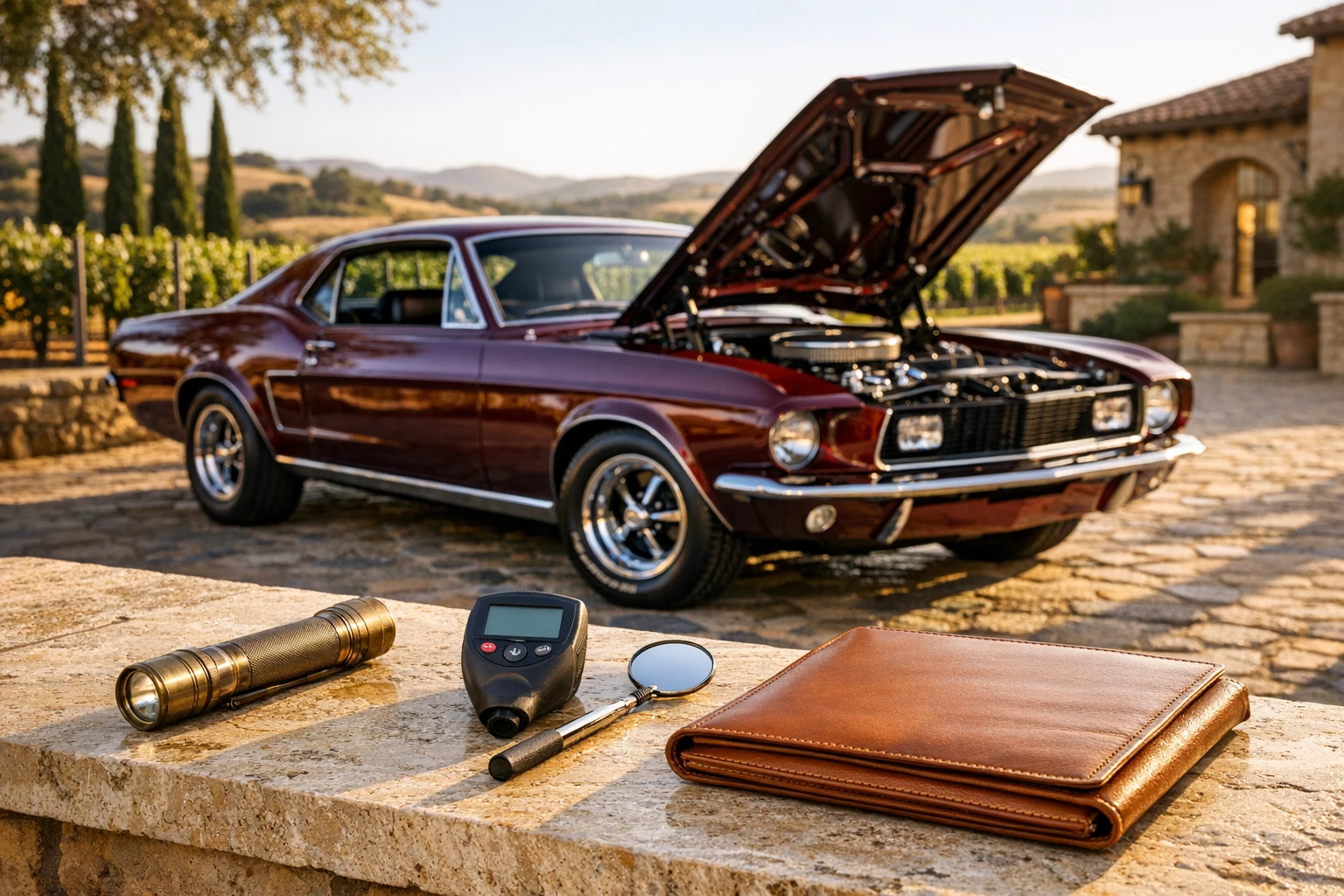
This guide is organized to help buyers move from admiration to evaluation. Instead of asking only whether a car is pretty, you want to ask whether it is correct, solid, mechanically honest, and fairly priced. Think of it as a walk-around with a flashlight in one hand and a calculator in the other.
- First, understand what makes a real 1966 Chevelle SS different from a clone or tribute.
- Second, inspect the body, frame, and rust-prone areas before you get distracted by shiny paint.
- Third, assess engines, transmissions, drivability, and restoration quality with equal skepticism.
- Fourth, compare pricing, documentation, and seller behavior before agreeing to terms.
Not every shopper is chasing the same target. Some want a highly documented SS396 with matching numbers and factory-correct finishes. Others want a driver-grade car with tasteful upgrades they can actually enjoy on modern roads. A few are hunting for a project because they want the story as much as the machine. All of those goals are valid, but they require different standards. The mistake is using concours expectations on a driver, or paying documented-car money for something that is mostly built from good intentions and reproduction parts.
If you approach the 1966 Chevelle SS with a clear framework, the search becomes far less emotional and far more rewarding. The car can still deliver that old-school V8 theater people imagine, but the smart buyer knows the performance begins before the test drive. It starts with research, patience, and the willingness to ask one more question than the seller hoped you would.
How to Verify a Genuine 1966 Chevelle SS Before You Buy
On a 1966 Chevelle, authenticity is not a side issue; it is one of the biggest drivers of value. Plenty of cars wear SS badges today, and some of them are honest tributes built because owners love the look. Others are presented too casually, or too confidently, as factory SS cars without the evidence to support that claim. If you are shopping in the upper part of the market, verification is where your money is either protected or quietly lost.
A useful advantage for buyers is that in 1966 the SS396 was treated as a distinct series rather than just a dress-up package on a standard Malibu. That means the VIN can provide meaningful clues. Genuine SS396 sport coupes and convertibles typically carry series identifiers such as 13817 and 13867 respectively, rather than the Malibu V8 series numbers you would expect on a non-SS car. This does not solve everything, but it immediately narrows the field. If a seller is advertising a real 1966 SS396 and the VIN does not match the expected SS series, you should slow down and verify every claim.
Beyond the VIN, documentation adds layers of confidence. Strong evidence can include:
- Original or older registrations that align with the car’s identity
- Protect-O-Plate, warranty paperwork, or dealer documents if available
- Build sheets or period service records
- Engine stampings, casting numbers, and date codes that make chronological sense
Numbers-matching claims deserve careful scrutiny. A seller may use the term loosely to mean “correct type of engine,” when a stricter buyer hears “factory-installed original engine and drivetrain.” Those are not the same thing. A date-correct 396 from the same model year may be perfectly acceptable in a driver or restoration, but it usually should not command the same price as a thoroughly documented original-drivetrain car. Ask for clear photos of stamp pads, casting dates, transmission codes, and rear axle information. If you are not comfortable decoding those details yourself, paying a marque expert for pre-purchase verification is often money well spent.
Also remember that some features people treat as proof are not proof at all. Badges, hood trim, bucket seats, tachometers, and rally wheels can all be added later. Reproduction parts are widely available, and a convincing clone can look excellent from ten feet away. That does not make it worthless. A well-built tribute may be a terrific car for someone who prioritizes driving enjoyment over paperwork. The key is honest pricing. A tribute should be sold as a tribute, a restamp should be treated as a red flag, and missing documentation should lower certainty rather than invite wishful thinking.
When in doubt, ask the seller one simple question: what specific evidence supports the car being what you say it is? The best sellers answer directly and provide records. The weakest sellers tell stories, avoid close-up photos, or become strangely philosophical about serial numbers. In the classic car world, paperwork will not guarantee perfection, but it can keep you from buying a very expensive costume.
Body, Frame, and Rust Inspection: Where the Real Money Disappears
If authenticity protects your value, body condition protects your budget. Rust repair on a 1966 Chevelle can be straightforward in theory because reproduction sheet metal exists, but the real-world cost of correcting poor repairs, replacing structural sections, and refinishing the car properly can climb fast. A shiny paint job is often the most misleading part of the buying experience, especially in online listings where reflections do most of the talking.
Start with the basics: panel fit, body lines, door gaps, and how the car sits. Uneven gaps do not always mean collision damage, but they do tell you where to look next. Open and close the doors, trunk, and hood. A door that drops, binds, or needs a slam may suggest hinge wear, body movement, or prior repair work. Bring a magnet and a paint meter if possible. Heavy filler is not automatically disqualifying on a sixty-year-old car, yet it should affect price and expectations.
The common trouble spots on mid-1960s A-body Chevrolets deserve slow inspection, not a casual glance. Pay close attention to:
- Lower front fenders and wheel arches
- Quarter panels, especially around wheel openings and lower rear sections
- Floor pans, trunk floor, and body mounts
- Rocker panels, cowl area, and rear window channel
- Frame condition, particularly in areas that trap moisture or road debris
Lift the carpets if the seller allows it. Look underneath with good lighting. Fresh undercoating can be harmless, but it can also be camouflage. Weld quality matters. Clean, consistent metalwork tells one story; overlapping patches, crude seams, and thick seam sealer tell another. If the car has been restored, ask for photos taken during metal repair. Good restorers document the ugly stage because they know buyers will want proof later.
The frame deserves the same attention as the exterior. A car can wear decent paint and still have a tired or compromised foundation. Surface rust is common and manageable, but scaling, perforation, bent sections, and questionable repair plates are far more serious. Check body mount areas for distortion. Inspect the trunk drops and rear structure. If the car has seen hard drag-strip use in its past, look for signs of stress, modifications, or welding related to traction devices.
Compare three broad body-condition categories when judging value. A restored car should show quality metalwork, straight panels, and finish consistency. A survivor or older driver may wear chips and thin paint, but originality can be an advantage if it lets you see what is truly there. A project may seem cheap until you price metalwork, alignment, chrome, glass, weatherstripping, and labor. That is how “just needs paint” turns into a five-figure surprise.
In short, rust is not merely a flaw on a 1966 Chevelle SS; it is a multiplier. It multiplies time, cost, and frustration. Buyers who inspect structure first often save themselves the trouble of falling in love with a hood stripe and then discovering the car is dissolving underneath it.
Engines, Transmissions, and the Test Drive: What a Good SS Should Feel Like
The mechanical side of a 1966 Chevelle SS is where romance meets reality. The car’s reputation is tied to its big-block identity, and for good reason. Factory SS396 models were available with 396 cubic-inch V8 engines in several states of tune, commonly including 325-horsepower, 360-horsepower, and 375-horsepower versions depending on specification. Those numbers still draw attention, but for a buyer today, the more useful question is not what the brochure once promised. It is what the car in front of you actually does, sounds like, and reveals under load.
Begin with a cold start if you can. A seller who warms the car before you arrive may simply be polite, but a cold engine tells a fuller story. Listen for excessive valvetrain noise, bottom-end knocks, exhaust leaks, and starter drag. Watch the exhaust for persistent blue smoke, which can point to oil consumption, or heavy white smoke after warm-up, which may suggest more serious issues. A healthy big-block can sound gloriously uneven and alive without sounding unhealthy.
Engine bay appearance should also be judged with balance. Cleanliness is good. Over-detailing can hide problems. Look for:
- Fluid leaks around valve covers, intake, rear main area, and transmission
- Signs of overheating such as stained overflow areas or mismatched cooling parts
- Correct or at least coherent fuel, vacuum, and ignition routing
- Date-coded or period-correct components if originality matters to you
Transmission choice changes the character of the car. A four-speed manual offers maximum involvement and is often what enthusiasts dream about. An automatic can be more relaxed and, depending on build, entirely appropriate for a road-focused driver. Neither is automatically better; the better choice is the one aligned with your intended use. On the road, shifts should feel deliberate rather than vague, and the clutch should engage without chatter or a sky-high pedal effort that suggests adjustment or wear issues.
Steering, braking, and suspension feel are equally revealing. Remember, even a sorted 1966 Chevelle will not behave like a modern sports coupe. It should, however, track reasonably straight, brake with confidence for its setup, and avoid excessive wandering, clunks, or dramatic body motions over ordinary pavement. If the car darts, overheats in traffic, shudders under braking, or vibrates at speed, budget for diagnosis rather than assuming it only needs “a tune-up.” That phrase has emptied many wallets.
Modified cars deserve their own standard. Upgrades such as electronic ignition, improved cooling, disc brakes, or better suspension components can make a driver-grade Chevelle more enjoyable and dependable. The key is whether the modifications were done cleanly and disclosed honestly. A thoughtfully upgraded car can be a smarter buy than a supposedly stock example assembled from mismatched parts. As always, condition and transparency matter more than sales poetry.
When the test drive ends, ask yourself whether the car feels cohesive. A good 1966 Chevelle SS should not merely make noise and attract attention. It should feel like a machine whose major systems agree with each other. That sense of coherence is often the difference between a classic you enjoy and one you constantly excuse.
Pricing, Paperwork, Negotiation, and Conclusion for Buyers
Once a 1966 Chevrolet Chevelle SS passes the visual and mechanical tests, the final challenge is deciding what it is worth to you in the current market. Prices vary widely because buyers are not paying for one thing. They are paying for a mix of originality, documentation, body style, drivetrain, restoration quality, and confidence. A real SS396 coupe with strong paperwork and a high-quality restoration can live in a very different price bracket from a driver-grade car with an older repaint and a replacement engine. Convertibles, rare engine combinations, and especially well-documented examples can stretch even higher.
As a broad guide rather than a promise, project-level cars often trade far below finished examples, but not always low enough to justify the restoration math. Solid driver-grade cars can sit in the middle of the market and appeal to buyers who want seat time more than trophies. Freshly restored, authentic, and well-documented cars usually command a premium, and especially desirable specifications can move into six-figure territory when provenance, presentation, and demand align. The lesson is simple: a cheap car can become expensive quickly, while a more expensive car may be the lower-risk purchase if it saves you from bodywork, drivetrain rebuilding, and endless parts chasing.
Before you negotiate, gather the file, not just the keys. A proper buyer packet should include as much of the following as possible:
- Clear title matching the car’s VIN and seller identity
- Invoices for restoration, engine work, paint, trim, and parts
- Photos documenting the build or repair stages
- Verification documents for engine, transmission, and rear axle codes
- A written list of known flaws, recent service, and included spare parts
How the seller presents information matters. Dealers may offer convenience, financing, or transport coordination, but their asking prices often reflect that packaging. Private sellers can provide richer history and more candid detail, although some are emotionally attached and price their memories into the deal. Auction purchases can move quickly and feel thrilling, yet they also reduce the time available for careful inspection. Choose the venue that matches your comfort with risk.
During negotiation, stay calm and specific. Do not announce that the car is “all wrong” unless you want the conversation to become defensive. Instead, point to facts: non-original engine, rust repair in the quarter panel, weak documentation, aged tires, noisy rear axle, or paint flaws. Those details justify your offer better than theatrics. If the seller is honest, your seriousness will show. If the seller resists every reasonable question, walking away is often your best leverage.
For the target buyer, the best 1966 Chevelle SS is not automatically the rarest or the most expensive one. It is the car that matches your budget, your standards, and your intended use without forcing you to pretend away major problems. If you want an investment-grade piece, buy documentation and correctness. If you want a weekend driver, buy structural health and mechanical honesty. Either way, the right purchase is the one you can enjoy without discovering, six weeks later, that the dream was mostly filler, fresh paint, and a creative description. Buy with your ears open, your flashlight charged, and your excitement under control, and the Chevelle can reward you exactly the way a great muscle car should.