Where to donate the clothes you don’t wear anymore
Closets have a quiet way of collecting stories: a blazer from an old job, jeans saved for a season that never came, a sweater bought for someone you used to be. Donating those pieces can clear physical space, reduce waste, and direct useful items toward people who need warmth, workwear, or everyday basics. The challenge is knowing where each item will actually do the most good, because a shelter, a thrift store, and a textile recycler solve very different problems.
Article Outline
1. How to sort clothing before donating and decide what is truly usable.
2. Which local places accept clothes, and how their needs differ from one another.
3. When national charities, specialized programs, and mail-in services make more sense.
4. How to prepare clothing properly so your donation helps instead of creating extra work.
5. A practical conclusion for readers who want to declutter responsibly and build a better giving habit.
1. Start by Sorting: What Belongs in a Donation Bag and What Does Not
The first step is not choosing a charity. It is choosing honesty. Many people treat donation as a soft landing for anything they no longer want, but organizations that accept clothing are not magical repair shops for stained, torn, or heavily worn items. A useful donation is clean, wearable, and appropriate for real life. If you would hesitate to hand an item to a friend, it probably should not go into the donation pile.
This matters because clothing nonprofits and resale operations spend time and money sorting everything they receive. When bags contain damp garments, single shoes, broken zippers, or items with strong odors, staff and volunteers often have to throw them away. In practical terms, bad donations can create disposal costs for organizations already working on tight budgets. At the same time, good donations can move quickly into the hands of families, students, job seekers, and people rebuilding after crisis.
A simple way to sort is to create four categories: donate, sell, repair, and recycle. Think of it as editing a wardrobe with a clear conscience rather than dumping it all in one direction.
Use these questions as a filter:
• Is it clean and free from mildew, smoke, or pet hair?
• Is it structurally wearable without major repair?
• Is it seasonally useful where you live?
• Would this help someone, or merely hand off a problem?
• Is it valuable enough that selling it could fund a cash donation instead?
There is also an environmental reason to sort carefully. Public data from environmental agencies has shown that millions of tons of textiles are discarded each year in the United States alone. Donation can reduce waste, but only when the item is still usable. Clothing that is too damaged for a person may still be suitable for textile recycling, where fibers can be repurposed into insulation, industrial rags, or other secondary materials. That route is very different from a charity shop, and mixing the two streams creates confusion.
A helpful rule of thumb is this: wearable clothes go to people, better-label pieces may be sold, lightly damaged items may be repaired, and end-of-life textiles go to recycling. Once you make those distinctions, the next decision becomes much easier. Instead of asking, “Where can I get rid of this?” you begin asking, “Who can actually use this well?” That small change in mindset makes your donation more respectful, more efficient, and far more likely to create real value.
2. Local Donation Options: Shelters, Thrift Stores, Schools, and Community Closets
If you want your clothing to make a visible local impact, start close to home. Local organizations often know exactly what their communities need, and they may distribute items faster than large centralized systems. The best destination depends on the type of clothing you have, the condition it is in, and whether you want it given directly to individuals or sold to support services.
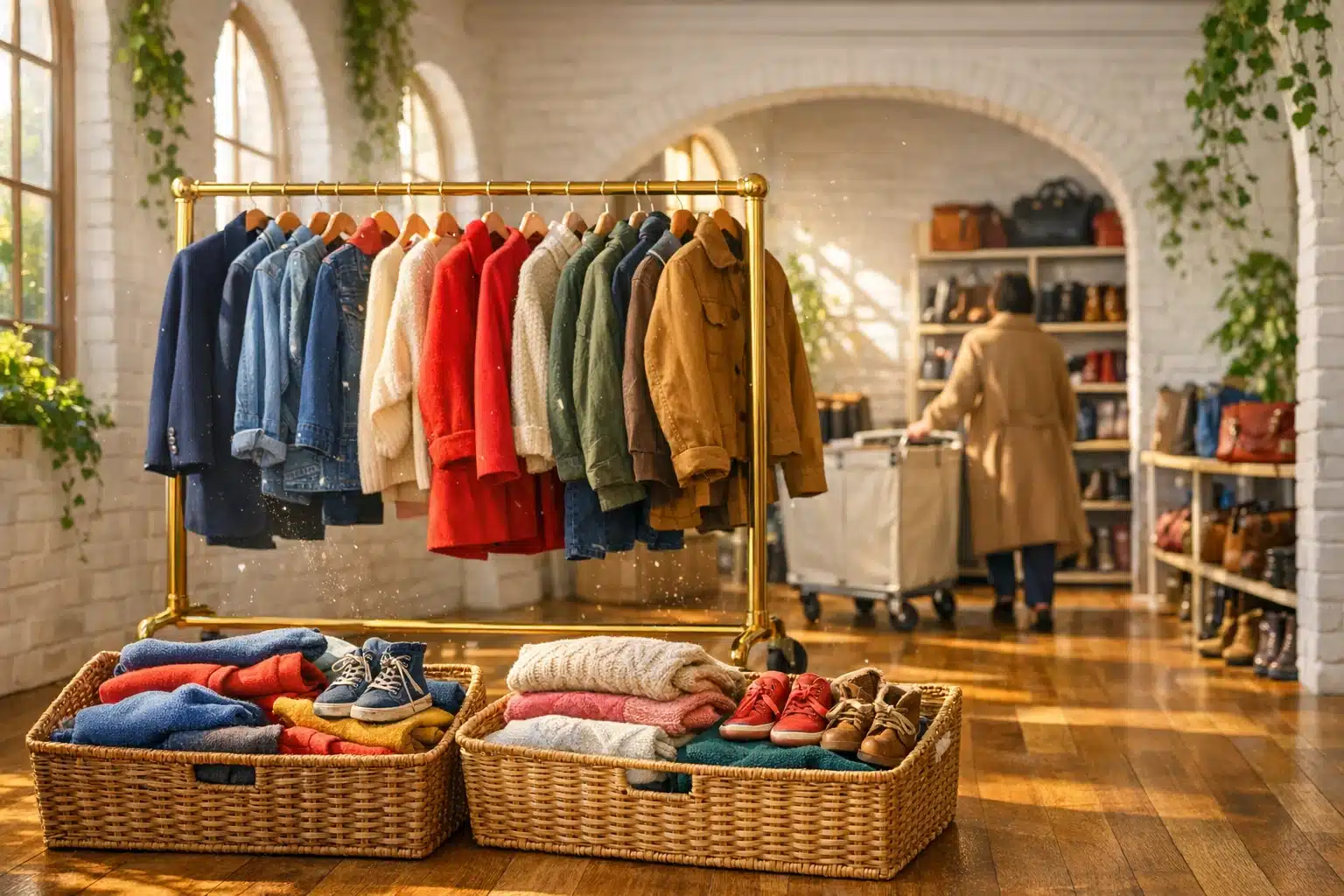
Thrift stores run by charities are the most familiar option. They usually accept a broad mix of everyday clothing, shoes, coats, bags, and household textiles. Their advantage is scale: they have sorting systems, regular intake hours, and a resale model that can fund job training, food programs, housing support, or other community work. Their limitation is that not everything goes straight to a person in need. Some items are sold first, and the revenue supports programs indirectly.
Shelters, transitional housing providers, and domestic violence organizations can be even more targeted. These groups may need practical items immediately, especially seasonal outerwear, basic shoes, pajamas, socks, and simple everyday clothing. However, they often have limited storage and stricter acceptance rules. Many do not accept used undergarments, heavily worn items, or large unscheduled drop-offs. Calling ahead is not just polite; it helps you match what you have with what they can use that week.
Other strong local options include:
• School social workers and family resource centers, which may need children’s basics, coats, and gym clothing.
• Community closets and mutual aid groups, which often distribute items directly without a resale step.
• Refugee support organizations, which may request family clothing sorted by size and season.
• Church or neighborhood outreach programs, which sometimes run emergency clothing rooms for nearby residents.
There are important differences among these choices. A thrift store is usually better for mixed bags of adult casual wear. A shelter may be the right place for warm coats, practical shoes, or unopened hygiene items. A school program may value kids’ uniforms, backpacks, and weather-appropriate basics more than fashion pieces. A mutual aid network may be quickest for urgent community needs, especially if it shares requests in real time through local message boards or social platforms.
One of the smartest moves is to look beyond the word “donation” and ask how the organization functions. Does it sell the clothing to fund services, give it away directly, or distribute only specific items? That answer shapes everything. A navy blazer might sit unnoticed in one location and become a crucial interview outfit in another. Donation is not only about generosity; it is about fit, timing, and usefulness. Local giving works best when you treat it less like disposal and more like placing the right object in the right hands.
3. When National Charities and Specialized Programs Make More Sense
Not every donation needs to stay local. Sometimes a national or specialized program is the better choice, especially when your clothing serves a particular purpose or when your area has limited local intake options. Large organizations can offer convenience, recognizable drop-off systems, and broader distribution networks, while niche groups may handle high-need categories with much more precision.
National thrift and donation organizations are often useful for standard adult and children’s clothing in decent condition. Their main strength is accessibility. Many people live near a staffed donation center or a retail location that accepts bags throughout the week. This is especially helpful for households doing a large clean-out during a move, seasonal reset, or family downsizing. Still, donors should read acceptance guidelines carefully, because categories vary by location. Some accept linens and shoes; others do not.
Specialized programs can be more effective when your items are not generic. Professional clothing, for example, may be more valuable to organizations that support job seekers than to a general donation warehouse. Formal business attire, interview shoes, and office-ready bags can help adults returning to work, entering the workforce, or rebuilding after financial hardship. Likewise, children’s clothing can be a better fit for programs focused on low-income families, foster care support, or school readiness. A winter coat may have the greatest impact through a cold-weather drive rather than a year-round resale shop.
Some categories to consider:
• Career-focused nonprofits for clean, contemporary workwear.
• Coat drives and seasonal campaigns for outerwear in colder regions.
• Shoe charities that collect wearable footwear separately.
• Disaster relief and family support groups that publish urgent, item-specific needs.
• Mail-in textile recovery services for garments too worn to donate but unsuitable for the trash.
Specialized donation can also solve the rural problem. If you live far from a major town, mail-in options may be the simplest way to handle select categories responsibly. Some programs provide prepaid bags or shipping labels for clothing and textiles, though terms differ. Others partner with retail brands or textile processors to recover fibers instead of reselling garments. That distinction matters. A donation meant for direct use should not be confused with a take-back program designed mainly for recycling.
Whenever you choose a large or distant organization, take a minute to review its mission, transparency, and current needs. Look for clear information about what happens to donated clothing, whether items are sold, distributed, exported, recycled, or discarded. This is not about suspicion. It is about alignment. A smart donor is not merely asking whether an organization accepts clothes. A smart donor wants to know what story those clothes enter next, and whether that story matches the reason they are giving in the first place.
4. How to Prepare Clothing Properly Before You Donate It
Once you have chosen a destination, preparation matters more than many donors realize. A donation bag should not feel like a mystery parcel someone else has to decode. Clean, sorted, and thoughtfully packed clothing is easier to process, easier to distribute, and more respectful to the people who may receive it. It also reduces the chance that good items will be delayed, overlooked, or discarded.
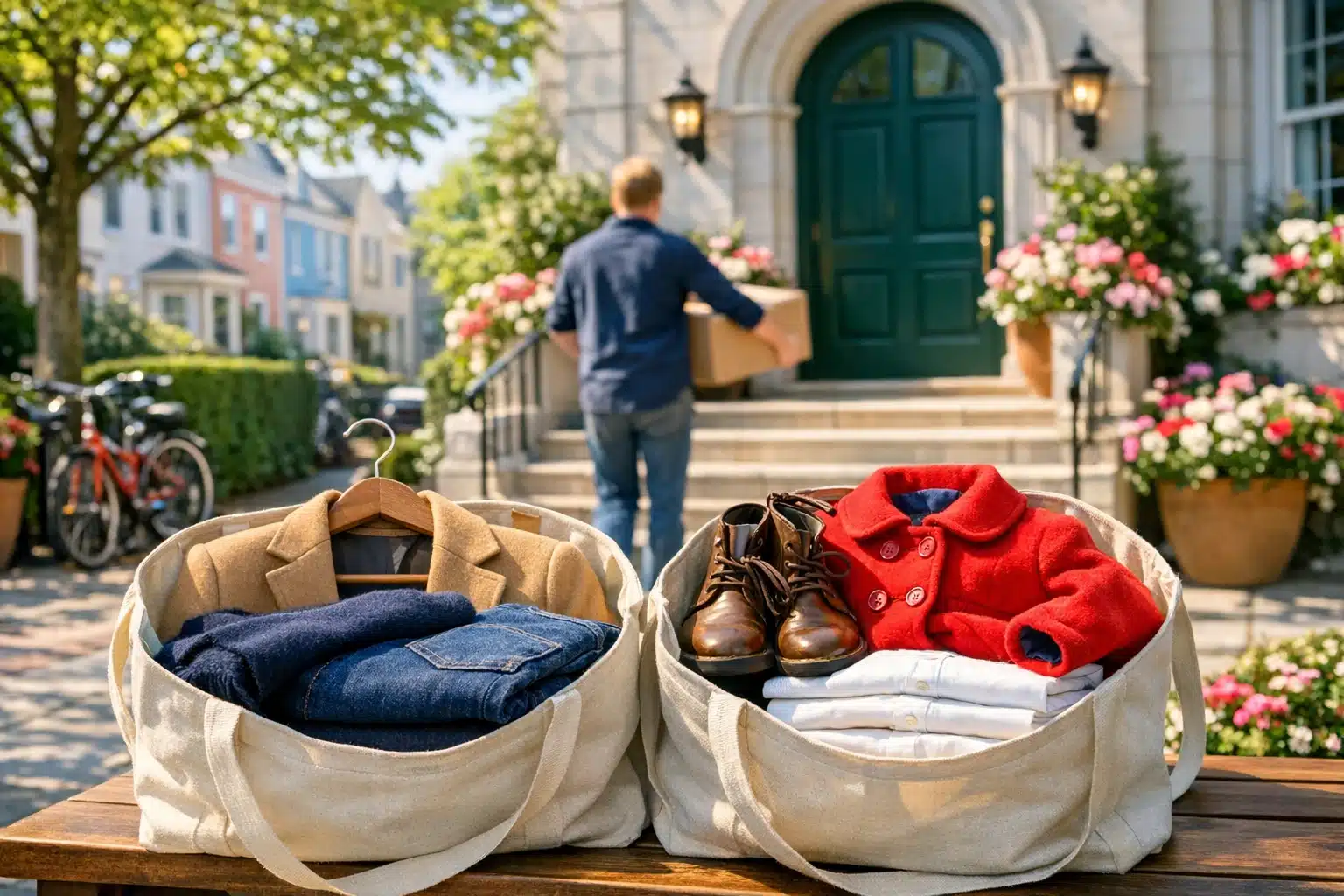
Begin with the basics: wash what you plan to donate, dry it fully, and fold it in a way that keeps it neat. Damp clothing can develop odor or mildew quickly, especially if it sits in a car trunk or donation room. Check pockets, remove tissues and receipts, and pair shoes together with laces or rubber bands if appropriate. Small actions save staff time and prevent items from being separated or damaged.
Repairs are worth considering when they are quick and realistic. Sewing on a missing button or replacing a loose hem can turn an almost-donation into a genuinely useful one. On the other hand, major repairs are usually better handled before donating or not at all. Charities are rarely equipped to fix complicated damage at scale. Presentation matters too. Wrinkled, inside-out, or bunched clothing may seem trivial, but it affects how fast workers can sort and display it.
A few practical guidelines help:
• Group similar sizes together when possible, especially for children’s items.
• Label bags if an organization requests categories such as men’s coats or baby clothing.
• Do not include wet textiles, broken accessories, or items with strong fragrance or smoke odor.
• Ask before donating specialty items like prom dresses, uniforms, or medical garments.
• Avoid dumping bags after hours unless the organization explicitly allows it.
It is also wise to learn what not to donate. Many organizations decline used underwear, stained socks, damaged pillows, or clothing with visible mold. Some can accept these materials only through separate textile recycling streams. Others do not have the capacity at all. Poor-quality donations are not neutral; they can raise labor costs and create waste-removal fees. In that sense, preparation is not cosmetic. It is operational.
There is one more overlooked step: timing. Seasonal clothing often helps most when donated before peak need, not after it. Winter coats delivered in early autumn are easier to sort and distribute than coats dropped off in late spring. School clothing is more useful before the term starts. Interview outfits matter most when employment programs are actively enrolling clients. Good donation is part empathy, part logistics. The cleaner and clearer your handoff, the more likely your clothing will move swiftly from your shelf to someone’s actual routine, which is where its second life truly begins.
5. Conclusion for Everyday Donors: Choose the Right Place, Not Just the Closest One
If you are standing in front of an overfull closet wondering what to do next, the most helpful takeaway is simple: the best place to donate clothes depends on the clothes themselves. There is no single perfect destination for every T-shirt, coat, blazer, children’s outfit, or worn-out towel. Local thrift stores, shelters, school resource centers, mutual aid groups, specialized nonprofits, and textile recyclers each solve different problems. When you match the item to the mission, your donation becomes more than a household chore completed on a Saturday afternoon.
For most readers, a practical system works better than waiting for a grand clean-out once a year. Keep one container for wearable donations, one for possible resale, and one for textiles that need recycling. As you notice pieces you no longer use, place them in the right stream immediately. That habit prevents emotional clutter from piling up and makes future giving far easier. It also reduces the temptation to unload everything in one rushed bag without checking condition.
Here is a smart final checklist:
• Everyday wearable clothing: usually best for local charity shops or community closets.
• Coats, sturdy shoes, and basics: often valuable for shelters, outreach teams, and seasonal drives.
• Office attire: stronger fit for employment-focused nonprofits.
• Children’s items: useful for schools, family centers, foster support groups, and refugee organizations.
• Damaged textiles: better for recycling than standard donation channels.
There is also room for intention beyond convenience. If you care most about immediate local impact, choose direct-distribution groups. If you want broad access and simple drop-off, a larger organization may suit you. If your goal is waste reduction, look for textile recycling programs that accept end-of-life fabric. And if your donation has monetary value, selling a few premium items and giving the proceeds to a trusted nonprofit can sometimes do more good than donating the garments themselves.
One final note for careful planners: if you donate to a qualified nonprofit and want to track the gift for tax purposes where applicable, keep a receipt and record what you gave. Rules vary by country, so it is worth checking local guidance rather than guessing. Beyond paperwork, though, the deeper point remains human. The shirt you forgot may become someone’s school outfit. The coat you stopped wearing may carry another person through a cold week. Decluttering feels better when it is done with direction, and generosity works best when it arrives where it is genuinely needed.